Picture this: You’re juggling email campaigns, social media posts, lead nurturing sequences, and customer follow-ups—all while trying to run your actual business. Sound familiar? Most small business owners spend hours each week on repetitive marketing tasks that could be automated.
Marketing automation isn’t just a fancy buzzword anymore. It’s the secret weapon that separates thriving businesses from those stuck in the daily grind. The right platform handles everything from welcome sequences to complex lead scoring, freeing you up to focus on growth.
But here’s the thing: not all marketing automation tools are created equal. Some are perfect for solopreneurs just getting started, while others are built for enterprise teams. Some excel at email marketing, others shine with social media automation, and a few do it all (but at a price).
The challenge isn’t finding a marketing automation tool—it’s finding the RIGHT one for your specific needs and budget. Whether you’re nurturing leads or recovering abandoned carts, there’s a platform designed exactly for your situation.
Here are the leading marketing automation platforms making waves in 2025, each with its own strengths, pricing structure, and ideal use cases.
1. HubSpot
Best for: Small to medium businesses wanting an all-in-one marketing, sales, and service platform
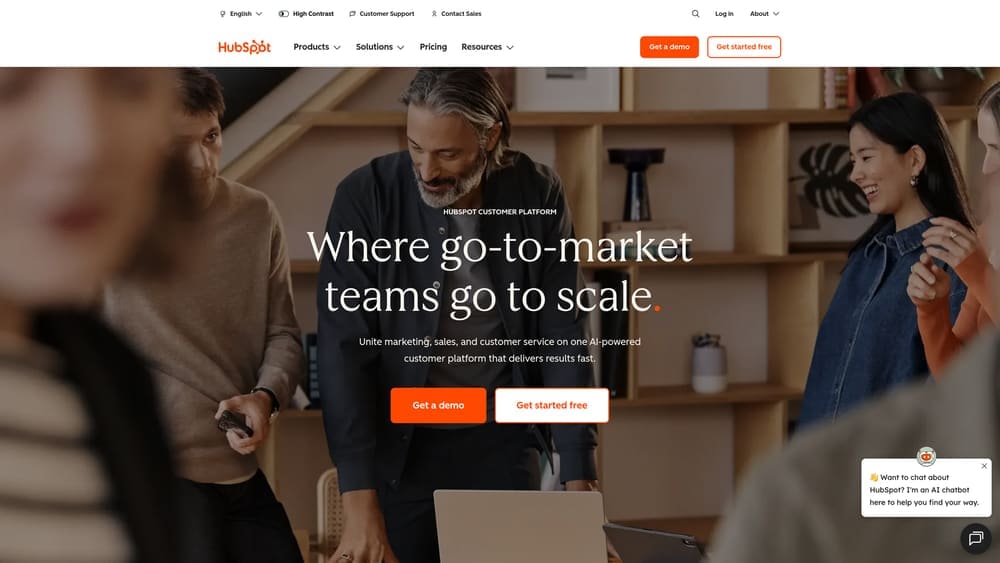
HubSpot remains the gold standard for businesses serious about inbound marketing and comprehensive customer relationship management.
Where This Tool Shines
HubSpot’s biggest advantage is its seamless integration between marketing, sales, and customer service. Unlike tools that force you to stitch together multiple platforms, HubSpot gives you a unified view of every customer interaction from first website visit to final purchase.
Their drag-and-drop email builder is intuitive enough for beginners but powerful enough for complex automation workflows. The platform excels at lead scoring and progressive profiling, automatically gathering more information about prospects with each interaction without overwhelming them with lengthy forms.
Key Features & Capabilities
Visual workflow builder: Create complex automation sequences with conditional logic and branching paths.
Built-in Smart CRM: Track detailed contact and company records with complete interaction history.
Landing page and form builder: Design conversion-optimized pages with built-in A/B testing capabilities.
Social media management: Schedule posts and monitor conversations across multiple platforms.
Comprehensive analytics: Track attribution and ROI from first touch to closed deal.
Email personalization: Use dynamic tokens to customize messages based on contact properties.
Lead scoring system: Automatically prioritize prospects based on engagement and fit.
Extensive integrations: Connect with 1,000+ third-party apps through their marketplace.
Best For / Ideal Users
HubSpot works best for growing businesses that want to scale their marketing efforts professionally. It’s ideal for B2B companies and service providers who value detailed customer insights.
The platform shines when your marketing and sales teams need to work from the same data. If you’re tired of switching between separate tools for email, CRM, and analytics, HubSpot’s unified approach eliminates that friction.
Pricing
HubSpot offers a robust free tier that includes basic CRM and email marketing. Paid plans start at $45/month for the Starter package, with Professional plans at $800/month and Enterprise at $3,200/month.
2. Mailchimp
Best for: Small businesses and e-commerce stores focused primarily on email marketing automation
Mailchimp has evolved from a simple email service provider into a comprehensive marketing platform that’s perfect for businesses just getting started with automation.
Where This Tool Shines
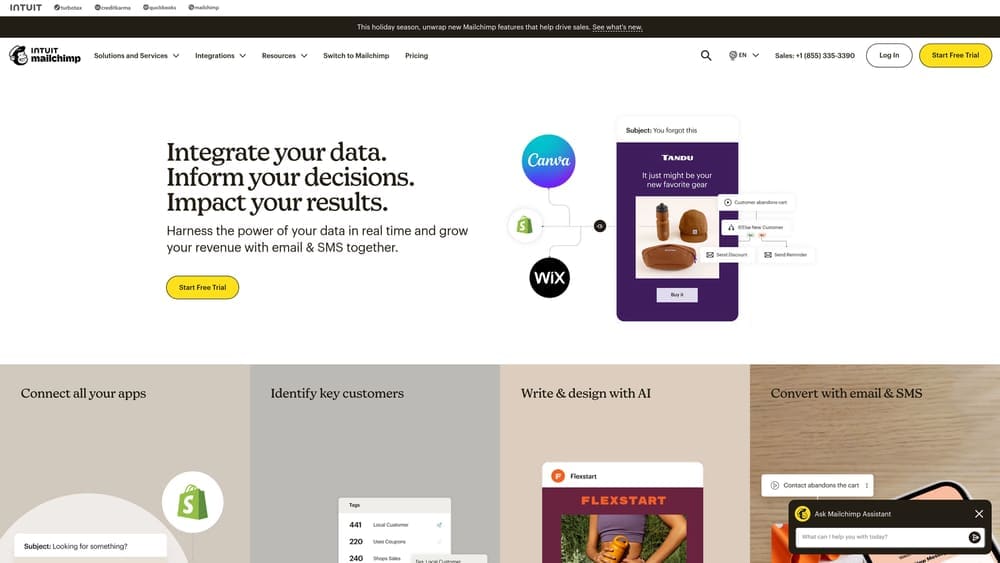
Mailchimp’s strength lies in its user-friendly interface and powerful e-commerce integrations. Their pre-built automation workflows make it incredibly easy to set up abandoned cart emails, welcome series, and post-purchase follow-ups without needing technical expertise.
The platform’s audience segmentation tools are surprisingly sophisticated, allowing you to target customers based on purchase behavior, engagement levels, and demographic data. Their email design tools are also top-notch, with templates that look professional right out of the box and adapt automatically to mobile devices.
Key Features & Capabilities
Pre-built automation workflows: Templates for common scenarios like welcome sequences and abandoned carts get you started in minutes.
Advanced audience segmentation: Create highly targeted groups based on purchase history, engagement, and custom criteria.
A/B testing capabilities: Test subject lines, content, and send times to optimize campaign performance.
E-commerce platform integrations: Native connections with Shopify, WooCommerce, and other major platforms sync your product and order data automatically.
Social media ad creation: Design and launch Facebook and Instagram ads directly from the platform.
Landing page builder: Create conversion-focused pages with drag-and-drop simplicity and built-in analytics.
Mobile app management: Monitor campaigns and respond to important metrics from anywhere using their iOS and Android apps.
Best For / Ideal Users
Mailchimp is perfect for small to medium e-commerce businesses that want powerful email automation without overwhelming complexity. It’s especially good for businesses that sell physical products and need robust e-commerce tracking.
Content creators and service providers who prioritize visual design and ease of use will also find Mailchimp’s interface intuitive and efficient.
Pricing
Mailchimp offers a free plan for up to 500 contacts with basic features. Paid plans start at $13/month for Essentials, $20/month for Standard with automation features, and $350/month for Premium capabilities including advanced segmentation and multivariate testing.
3. ActiveCampaign
Best for: Businesses wanting advanced automation capabilities with CRM integration at a reasonable price
ActiveCampaign strikes the perfect balance between powerful automation features and affordability, making it a favorite among growing businesses.
Where This Tool Shines
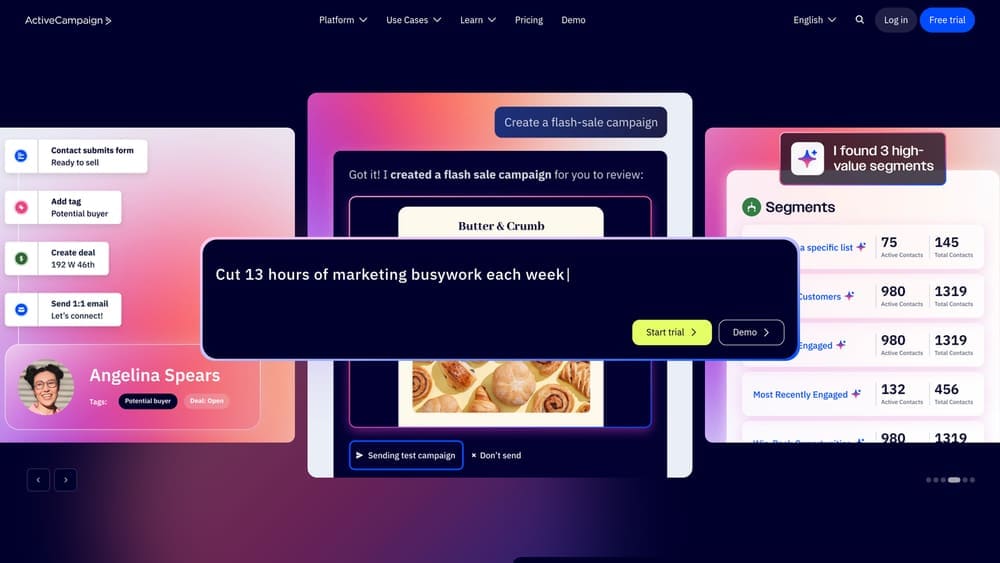
ActiveCampaign’s visual automation builder is incredibly intuitive, allowing you to create complex, multi-step campaigns that respond to customer behavior in real-time. You can map out entire customer journeys with conditional logic that branches based on actions, engagement levels, or specific attributes.
The platform excels at behavioral tracking, monitoring how contacts interact with your emails, website, and other touchpoints to trigger highly personalized follow-up sequences. Their machine learning capabilities automatically optimize send times based on when individual contacts are most likely to engage, and the predictive analytics can forecast customer lifetime value to help you prioritize your most valuable relationships.
Key Features & Capabilities
Visual Automation Builder: Drag-and-drop interface with conditional logic for creating sophisticated workflows.
Built-in CRM: Deal tracking and pipeline management that connects marketing activities directly to sales outcomes.
Predictive Sending: Machine learning optimizes send times and predicts customer behavior patterns.
Advanced Segmentation: Create highly specific audience groups based on behavior, engagement, and custom attributes.
Multi-Channel Marketing: SMS marketing integration enables coordinated campaigns across email and text messaging.
Site Tracking: Monitor website activity and trigger automations based on specific page visits or actions.
Lead Scoring: Customizable point systems that automatically identify your hottest prospects.
Deep Integrations: Connect with WordPress, Shopify, and 870+ other apps for seamless data flow.
Best For / Ideal Users
ActiveCampaign is ideal for businesses that want enterprise-level automation features without enterprise pricing. It’s perfect for coaches and consultants who need sophisticated nurturing sequences to move prospects through longer sales cycles.
SaaS companies benefit from the platform’s ability to track user behavior and trigger onboarding sequences, feature announcements, and upgrade campaigns. E-commerce businesses appreciate the behavioral tracking and abandoned cart recovery capabilities, though platforms like Klaviyo offer more specialized e-commerce features.
The built-in CRM makes ActiveCampaign especially valuable for businesses where marketing and sales teams need to work from the same data, ensuring smooth handoffs and complete visibility into customer interactions.
Pricing
ActiveCampaign starts at $15/month for the Lite plan (up to 500 contacts), $70/month for Plus, $159/month for Professional, and $279/month for Enterprise features. Pricing scales based on contact count.
4. Klaviyo
Best for: E-commerce businesses that need data-driven email and SMS marketing automation
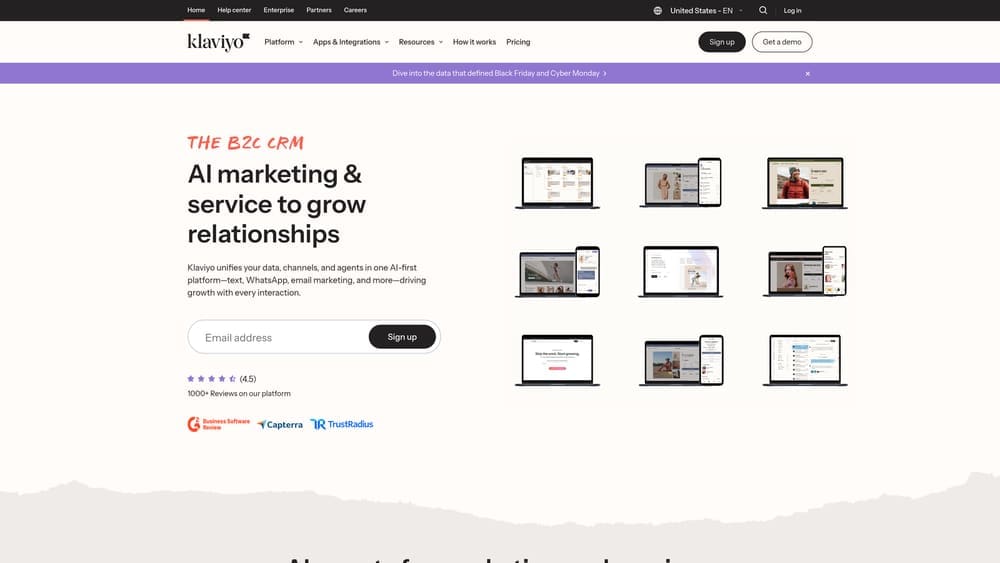
Klaviyo has become the go-to choice for serious e-commerce businesses that want to maximize revenue through sophisticated customer data analysis.
Where This Tool Shines
Klaviyo’s superpower is its ability to unify customer data from multiple sources and use that information to create incredibly targeted campaigns. Their predictive analytics can identify customers most likely to make repeat purchases, churn, or respond to specific offers.
The platform’s flow builder is specifically designed for e-commerce scenarios, with pre-built templates for abandoned cart recovery, browse abandonment, and post-purchase upsells. What sets Klaviyo apart is how it tracks every customer interaction—from email opens to website browsing to purchase history—and uses that data to trigger perfectly timed messages.
Key Features & Capabilities
Unified Customer Profiles: Every contact gets a comprehensive profile that includes purchase history, browsing behavior, email engagement, and SMS interactions all in one place.
Predictive Analytics: The platform uses machine learning to calculate customer lifetime value and predict churn risk, helping you focus efforts on your most valuable customers.
Advanced Segmentation: Create highly specific segments based on purchase behavior, product preferences, engagement levels, and predicted future actions.
SMS Marketing Integration: Run coordinated email and SMS campaigns with automated flows and two-way conversations that feel personal.
Product Recommendation Engine: Dynamically insert personalized product recommendations in emails based on browsing and purchase history.
Revenue Attribution Tracking: See exactly how much revenue each campaign, flow, and message generates with detailed attribution reporting.
A/B Testing: Test different versions of flows, campaigns, and SMS messages to continuously optimize performance.
Deep E-commerce Integrations: Native connections with Shopify, Magento, BigCommerce, WooCommerce, and other major platforms sync product and customer data automatically.
Best For / Ideal Users
Klaviyo is perfect for e-commerce businesses that want to maximize customer lifetime value through data-driven marketing. It’s especially powerful for fashion, beauty, home goods, and any business with repeat customers who need sophisticated behavioral tracking.
The platform works best for stores doing at least $100K in annual revenue who are ready to invest in advanced automation. If you’re just starting out, the learning curve might be steep, but the revenue potential makes it worthwhile.
Pricing
Klaviyo offers a free plan for up to 250 contacts. Email plans start at $20/month, while email and SMS plans begin at $35/month, scaling based on contact count.
5. ConvertKit
Best for: Content creators, bloggers, and online course creators who prioritize simplicity and deliverability
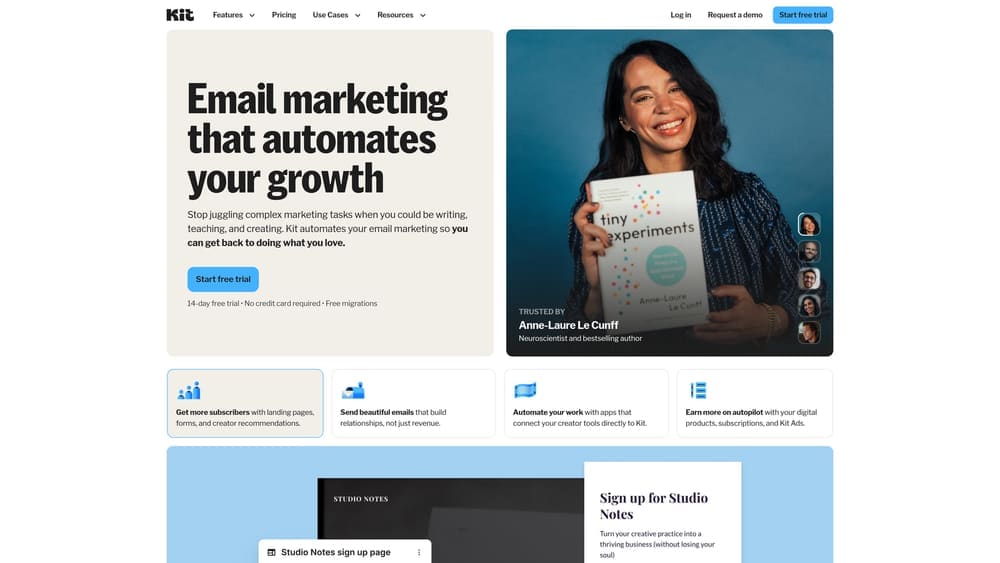
ConvertKit was built specifically for creators who want powerful automation without the complexity of enterprise platforms.
Where This Tool Shines
ConvertKit’s visual automation builder is refreshingly simple, making it easy to create sophisticated sequences without getting lost in complexity. Their tagging system is incredibly flexible, allowing you to organize subscribers based on interests, behavior, and engagement levels without the rigid list structure other platforms force on you.
The platform prioritizes email deliverability above all else, with dedicated IP options and strong relationships with major email providers ensuring your messages reach the inbox. For creators whose business depends on email communication, this focus on deliverability is worth its weight in gold.
Key Features & Capabilities
Visual Automation Builder: Drag-and-drop interface that makes complex sequences feel simple to create and manage.
Flexible Tagging System: Organize subscribers by interests, purchases, and behavior without complicated list management.
Customizable Forms and Landing Pages: Create opt-in forms and landing pages that match your brand without coding.
Subscriber Scoring: Automatically track engagement levels to identify your most active subscribers.
Creator-Focused Integrations: Seamless connections with course platforms like Teachable, membership sites, and digital product tools.
Commerce Features: Sell digital products and subscriptions directly through ConvertKit without third-party tools.
Best For / Ideal Users
ConvertKit is ideal for bloggers, podcasters, YouTubers, online course creators, and coaches who want to build engaged audiences. It’s perfect for anyone selling digital products or services to a passionate community.
The platform works especially well for creators who value simplicity over feature bloat and need reliable email delivery more than fancy bells and whistles.
Pricing
ConvertKit starts at $15/month for up to 300 subscribers, with the Creator plan at $29/month and Creator Pro at $59/month offering advanced features like subscriber scoring and advanced reporting.
6. Pardot (Salesforce Marketing Cloud Account Engagement)
Best for: B2B enterprises with complex sales cycles and existing Salesforce infrastructure
Pardot delivers enterprise-grade B2B marketing automation built specifically for companies selling to other businesses.
Where This Tool Shines
Pardot excels at managing complex B2B buyer journeys where multiple stakeholders influence purchase decisions over weeks or months. The platform’s lead scoring goes beyond simple email opens—it tracks website visits, content downloads, webinar attendance, and form submissions to build comprehensive engagement profiles.
The native Salesforce integration is where Pardot truly separates itself from competitors. Marketing and sales teams work from the same data, with complete visibility into every prospect interaction. When a lead hits your scoring threshold, it automatically creates a task for the sales rep. No manual handoffs, no lost opportunities.
Key Features & Capabilities
Advanced Lead Scoring: Build multi-dimensional scoring models that consider engagement recency, content type, and behavioral patterns with automatic score decay for inactive prospects.
Salesforce CRM Sync: Bi-directional data flow ensures marketing and sales always work from the same information with real-time updates.
Dynamic Content: Personalize emails, landing pages, and forms based on industry, company size, role, or any custom attribute you track.
ROI Reporting: Track marketing’s contribution to pipeline and revenue with multi-touch attribution showing which campaigns influence closed deals.
Account-Based Marketing: Coordinate campaigns across multiple contacts within target accounts, tracking engagement at both individual and company levels.
Progressive Profiling: Gradually collect prospect information across multiple interactions instead of overwhelming them with lengthy initial forms.
Best For / Ideal Users
Pardot is designed for B2B companies with deal values that justify the investment—typically $10K+ average contract values. Technology companies, professional services firms, manufacturing businesses, and enterprise software providers find the most value.
The platform works best when you already use Salesforce CRM or plan to implement it. Companies with dedicated marketing operations roles get the most from Pardot’s sophisticated capabilities.
Pricing
Pardot pricing starts at $1,250/month for Growth edition (10,000 contacts), $2,500/month for Plus (10,000 contacts), $4,000/month for Advanced (75,000 contacts), and $15,000/month for Premium features.
7. Drip
Best for: E-commerce brands wanting sophisticated automation with a focus on customer behavior
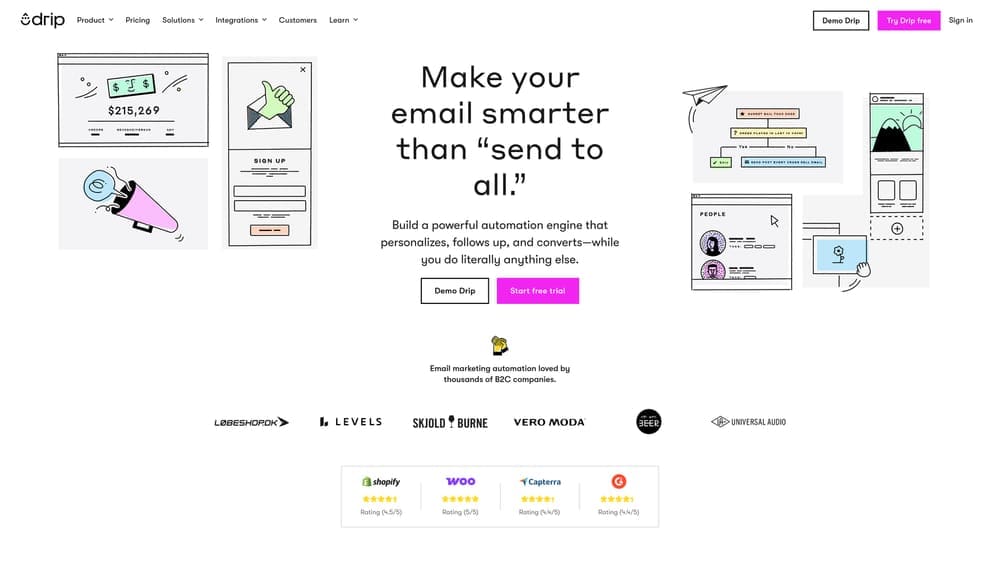
Drip positions itself as the “ECRM” (E-commerce CRM) that combines email marketing automation with detailed customer behavior tracking.
Where This Tool Shines
Drip’s strength lies in its ability to track and respond to customer behavior across multiple channels. Their automation workflows can trigger based on website activity, purchase history, email engagement, and even social media interactions.
The platform’s revenue attribution is exceptionally detailed, showing exactly how each email contributes to sales. Their segmentation capabilities allow you to create highly specific customer groups based on dozens of behavioral and demographic factors—perfect for brands that want to move beyond basic email blasts.
Key Features & Capabilities
Multi-channel behavior tracking: Monitor customer actions across email, website, and social media to trigger relevant automation.
Revenue attribution: See exactly which campaigns and emails are driving sales with detailed performance tracking.
Advanced segmentation: Create sophisticated customer groups using behavioral data, purchase history, and engagement patterns.
Personalized product recommendations: Automatically include relevant products in emails based on browsing and purchase behavior.
Onsite personalization: Display targeted popups and forms based on visitor behavior and customer data.
Best For / Ideal Users
Drip works best for established e-commerce businesses that want to maximize customer lifetime value through sophisticated behavioral marketing. It’s particularly effective for fashion, beauty, and lifestyle brands with engaged customer bases.
The platform suits businesses ready to move beyond basic email marketing into true customer relationship management. If you’re tracking customer journeys across multiple touchpoints and want automation that responds intelligently, Drip delivers.
Pricing
Drip starts at $39/month for up to 2,500 contacts, scaling to $1,899/month for 170,000 contacts, with custom pricing for larger lists.
8. GetResponse
Best for: Small to medium businesses wanting an affordable all-in-one marketing platform with built-in webinar capabilities
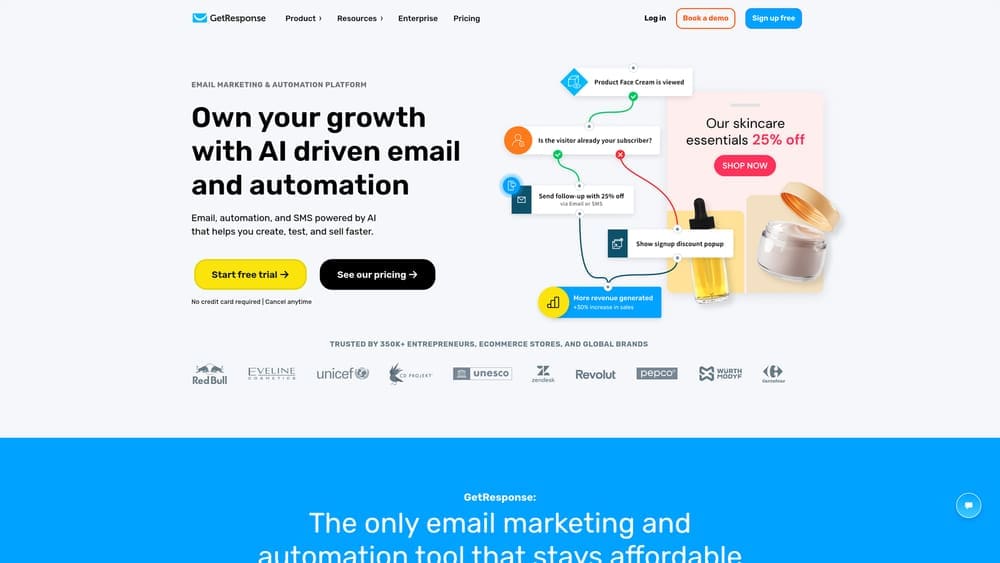
GetResponse combines email automation, landing pages, webinars, and e-commerce tools into one surprisingly affordable package that punches well above its price point.
Where This Tool Shines
GetResponse’s automation builder hits that sweet spot between power and simplicity. You get visual workflow creation with conditional logic and behavioral triggers, but without the overwhelming complexity that makes other platforms feel like you need a computer science degree. The drag-and-drop interface actually makes sense, with pre-built templates for common scenarios like welcome sequences and abandoned cart recovery.
The real standout feature? The built-in webinar platform. Most marketing automation tools make you cobble together third-party webinar software, but GetResponse includes it natively. You can host live or on-demand webinars, automatically send reminders, and trigger follow-up sequences based on attendance. For businesses using webinars to generate leads or educate customers, this integration alone justifies the platform.
Key Features & Capabilities
Visual Automation Builder: Create multi-step workflows with conditional logic, behavioral triggers, and time-based actions without touching code.
Integrated Webinar Platform: Host up to 1,000 attendees with automated registration, reminders, and post-webinar follow-up sequences.
Landing Page Builder: Over 200 mobile-responsive templates with A/B testing and conversion tracking built in.
E-commerce Integration: Connect with Shopify, WooCommerce, and other platforms for abandoned cart recovery and product recommendations.
Advanced Segmentation: Tag and segment contacts based on behavior, demographics, and engagement levels for targeted messaging.
Conversion Funnels: Build complete sales funnels with landing pages, email sequences, and payment processing in one place.
Best For / Ideal Users
GetResponse works exceptionally well for coaches, consultants, and course creators who rely on webinars for lead generation. The platform’s webinar capabilities combined with automated follow-up sequences create a complete lead nurturing system.
Small e-commerce businesses also benefit from GetResponse’s abandoned cart recovery and product recommendation features, especially when budget constraints make more expensive platforms impractical. The platform handles the essentials without breaking the bank.
Service businesses wanting to consolidate multiple tools will appreciate having email marketing, landing pages, and automation in one affordable package rather than paying for separate subscriptions.
Pricing
GetResponse starts at $19/month for basic email marketing with unlimited newsletters. The Marketing Automation plan costs $59/month and includes the visual workflow builder. E-commerce features come at $119/month, while Enterprise plans with custom pricing add advanced segmentation and dedicated support.
Putting It All Together
The right marketing automation tool transforms how you connect with customers, but the “best” choice depends entirely on your specific situation. HubSpot delivers unmatched power for businesses wanting a complete marketing-sales-service ecosystem, while Klaviyo and Drip dominate the e-commerce space with sophisticated behavioral tracking. For creators and coaches, ConvertKit’s simplicity wins every time.
Here’s the quick decision framework: If you’re running an online store, start with Klaviyo or Mailchimp. B2B companies with complex sales cycles should explore HubSpot or ActiveCampaign. Content creators and course builders will love ConvertKit’s creator-focused approach. And if you’re just getting started? Mailchimp’s free tier or ActiveCampaign’s affordable entry point make testing easy.
Budget matters, but think about time saved and revenue generated. A platform that costs $100/month but automates 20 hours of manual work and nurtures leads more effectively pays for itself immediately. The real cost is staying stuck in manual mode while competitors scale effortlessly.
Don’t overthink it. Pick a tool that meets 80% of your current needs, set up your first automation this week, and refine as you grow. The biggest mistake is waiting for the “perfect” moment while opportunities slip away. Start simple—a welcome sequence or abandoned cart email—and build from there.
Ready to take your marketing to the next level? Learn more about our services and discover how we help businesses implement and optimize their marketing automation strategies for maximum impact.