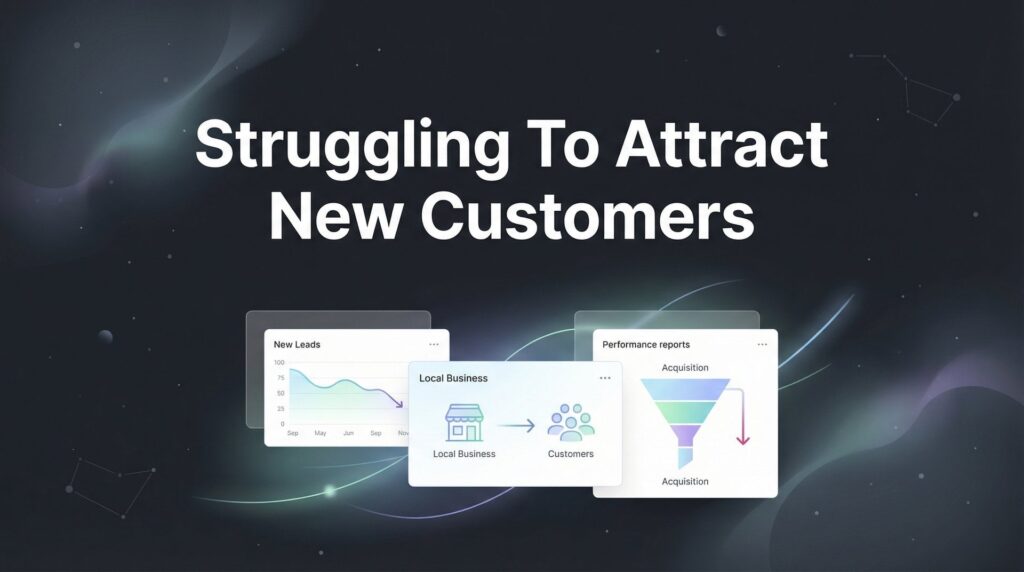
You’ve built a solid business. Your service is excellent. Your customers love what you do. But here’s the problem: the phone isn’t ringing like it used to. New customer inquiries have slowed to a trickle, and you’re starting to wonder what changed.
You’re not alone in this struggle. Most local business owners hit this wall at some point—that uncomfortable reality where word-of-mouth isn’t enough anymore, and your traditional marketing approaches have stopped producing results.
The good news? Customer acquisition isn’t about working harder or spending more money blindly. It’s about working smarter with strategies that actually move the needle in today’s market.
This guide cuts through the noise and gives you seven battle-tested approaches to turn your customer drought into a steady stream of qualified leads. No fluff, no theory—just actionable tactics you can implement this week to start seeing real results.
1. Fix Your Local Search Presence
The Challenge It Solves
Right now, potential customers are searching for exactly what you offer—but they’re finding your competitors instead. When someone searches “plumber near me” or “best Italian restaurant downtown,” Google shows them businesses with optimized local profiles. If yours isn’t dialed in, you’re invisible to these high-intent searchers who are ready to buy.
Think about your own behavior. When you need a service, you pull out your phone and search. You look at the top results, check reviews, and make a decision within minutes. Your potential customers do the same thing.
The Strategy Explained
Your Google Business Profile is the foundation of local visibility. It’s free, it’s powerful, and most businesses barely scratch the surface of what it can do. When properly optimized, your profile appears in the local map pack—those three businesses Google highlights at the top of local searches.
But optimization goes beyond just claiming your profile. You need complete information, regular updates, customer reviews, photos that showcase your work, and responses to every review. Google rewards businesses that actively engage with their profiles by showing them more often.
Beyond Google, your business information needs to be consistent across every online directory—Yelp, Facebook, industry-specific sites, and local business directories. Inconsistent information confuses search engines and potential customers alike.
Implementation Steps
1. Claim and verify your Google Business Profile if you haven’t already. Fill out every single field—business hours, services, attributes, description, and categories. Add high-quality photos of your location, team, and work.
2. Set up a system to request reviews from satisfied customers immediately after completing a job or transaction. Make it easy by sending them a direct link to your review page. Respond to every review, positive or negative, within 24 hours.
3. Post weekly updates to your Google Business Profile—special offers, new services, helpful tips, or behind-the-scenes content. These posts keep your profile active and give potential customers more reasons to choose you.
4. Audit your business listings across major directories using a tool like Moz Local or BrightLocal. Ensure your name, address, and phone number are identical everywhere. Fix any inconsistencies immediately.
Pro Tips
Add your primary service keywords to your business description naturally. If you’re a roofing contractor, mention “roof repair,” “roof replacement,” and “storm damage” in your description. Upload new photos monthly—Google favors recently updated profiles. Enable messaging so customers can contact you directly through your profile.
2. Turn Your Website Into a Lead-Generating Machine
The Challenge It Solves
You’re getting website traffic, but visitors leave without contacting you. They land on your homepage, look around for a few seconds, and disappear. All that effort driving traffic to your site is wasted because your website doesn’t guide visitors toward taking action.
Your website isn’t a digital brochure—it’s a sales tool. Every element should push visitors toward one goal: contacting you for your service.
The Strategy Explained
Conversion rate optimization means removing friction and adding motivation at every step of the visitor journey. When someone lands on your site, they should immediately understand what you do, why you’re different, and how to take the next step.
Most business websites fail because they focus on features instead of benefits, bury contact information, or overwhelm visitors with too many choices. The best converting websites have crystal-clear value propositions, prominent calls-to-action, and remove every possible barrier to contact.
Think of your website as a conversation. If a potential customer walked into your physical location, you wouldn’t hand them a brochure and walk away. You’d greet them, understand their needs, explain how you can help, and guide them toward the next step. Your website needs to do the same thing.
Implementation Steps
1. Rewrite your homepage headline to focus on the customer’s problem and your solution. Instead of “ABC Plumbing—Serving Denver Since 1995,” try “Emergency Plumbing Repairs in Denver—We’ll Fix Your Problem Today.” Make it about them, not you.
2. Place your phone number prominently in the header of every page. Add a click-to-call button that works on mobile devices. Create a contact form that asks for only essential information—name, phone, and brief description of their need. Every extra field you add reduces conversions.
3. Add clear calls-to-action throughout your site. After describing a service, tell visitors exactly what to do next: “Call now for a free estimate,” “Schedule your consultation today,” or “Get your custom quote in 24 hours.” Use contrasting button colors that stand out.
4. Ensure your website loads quickly and works perfectly on mobile devices. Test it on your own phone. If pages load slowly or buttons are hard to tap, you’re losing customers. Compress images, eliminate unnecessary plugins, and consider upgrading your hosting if needed.
Pro Tips
Add live chat to your website—it can increase conversions significantly because it catches visitors at their moment of highest interest. Include customer testimonials on every service page, not just a dedicated testimonials page. Use real names and photos when possible. Create urgency with limited-time offers or availability indicators like “Only 3 slots available this week.”
3. Launch Targeted PPC Campaigns
The Challenge It Solves
Organic marketing takes time to build momentum. You need customers now, not six months from now. Your bills don’t wait for your SEO strategy to kick in, and your business can’t survive on hope that organic traffic will eventually arrive.
PPC advertising solves the immediacy problem. When done correctly, you can start generating qualified leads within days of launching a campaign.
The Strategy Explained
Pay-per-click advertising puts your business at the top of search results for the exact terms your ideal customers are searching. When someone types “emergency AC repair” on a hot summer day, they’re ready to hire someone immediately. PPC ensures you’re the first business they see.
The key is targeting high-intent keywords—searches that indicate the person is ready to buy, not just browsing. Someone searching “how much does AC repair cost” is researching. Someone searching “24-hour AC repair near me” is ready to hire right now.
Smart PPC isn’t about bidding on every keyword related to your business. It’s about identifying the searches that convert into actual customers and focusing your budget there. You want to pay for clicks that turn into phone calls and booked appointments, not tire-kickers.
Implementation Steps
1. Start with Google Local Services Ads if available in your industry. These appear above regular PPC ads and include Google’s verification badge. You only pay for actual leads, not clicks. Set up your profile, pass the background check, and start receiving leads.
2. Create a Google Ads Search campaign targeting your core services with location modifiers. If you’re a dentist in Austin, bid on terms like “emergency dentist Austin,” “teeth cleaning Austin,” and “dental implants Austin.” Write ad copy that matches the search intent exactly.
3. Set up conversion tracking before spending a dollar. Install the Google Ads conversion tracking code on your website to track form submissions and phone calls. Without tracking, you’re flying blind—you won’t know which keywords and ads are actually generating customers.
4. Start with a modest daily budget and adjust based on performance. Many local businesses can generate meaningful results with just a few hundred dollars per month if campaigns are tightly focused on high-intent keywords. Monitor your cost per lead weekly and pause underperforming keywords.
Pro Tips
Use ad extensions aggressively—call extensions, location extensions, and callout extensions. They make your ads larger and more prominent without additional cost. Create separate campaigns for your highest-value services so you can allocate more budget to what drives the most revenue. Schedule ads to run during your business hours unless you have 24/7 availability. Run search campaigns first before experimenting with display or video ads—search intent is higher and typically converts better for local businesses.
4. Build a Referral System
The Challenge It Solves
You occasionally get referrals from happy customers, but it’s random and unpredictable. You can’t build a business on hoping customers remember to recommend you when their friends need your service. Word-of-mouth is powerful, but leaving it to chance means leaving money on the table.
Most businesses underutilize their existing customer base. These people already trust you, have experienced your service, and would happily recommend you—if you made it easy and gave them a reason to do so.
The Strategy Explained
A referral system transforms occasional word-of-mouth into a predictable customer acquisition channel. Instead of hoping customers refer you, you create a structured process that encourages and rewards referrals consistently.
The best referral systems make it easy for customers to refer you and give them a compelling reason to do so. People want to help friends and family find good service providers, but they need a gentle push and clear instructions on how to make the referral.
Think about it from your customer’s perspective. They’re satisfied with your work, but referring you requires effort—remembering your contact information, explaining what you do, and making the introduction. Remove all that friction and add an incentive, and referrals become automatic.
Implementation Steps
1. Create a simple referral offer that benefits both the existing customer and the new customer. For example: “Refer a friend and you both get $50 off your next service.” Make the reward meaningful enough to motivate action but sustainable for your business economics.
2. Ask for referrals at the moment of highest satisfaction—right after completing excellent work. Train your team to say: “We’re so glad you’re happy with the results. We grow our business through referrals from customers like you. Do you know anyone else who might need our services?” Then hand them a referral card with your offer.
3. Make referring ridiculously easy. Create a dedicated referral page on your website where customers can submit their friend’s contact information. Send them a shareable link they can text to friends. Provide referral cards they can hand out. The fewer steps required, the more referrals you’ll get.
4. Follow up with both parties promptly. When you receive a referral, thank the referring customer immediately and update them when their friend becomes a customer. This positive reinforcement encourages them to refer more people in the future.
Pro Tips
Track referral sources in your CRM or customer management system so you know which customers are your best referral sources. Send these VIP referrers extra appreciation—a handwritten thank-you note, a small gift, or exclusive perks. Consider tiered rewards where customers get bigger bonuses for multiple referrals. Create a “VIP referral club” for customers who refer three or more new clients.
5. Leverage Social Proof
The Challenge It Solves
Potential customers don’t know if they can trust you. They’re comparing you to competitors, reading reviews, and looking for evidence that you’ll deliver what you promise. Without visible proof of your expertise and reliability, they’ll choose the business with stronger social proof—even if your service is better.
Trust is the biggest barrier to new customer acquisition. People are naturally skeptical of marketing claims. They want to hear from other customers who’ve already taken the risk and been satisfied.
The Strategy Explained
Social proof—testimonials, reviews, case studies, and customer success stories—removes doubt by showing prospects that real people have hired you and been happy with the results. It transforms your marketing from “trust me” to “trust them.”
The most powerful social proof is specific and detailed. Generic testimonials like “Great service!” don’t move the needle. But a detailed review that describes the customer’s problem, your solution, and the specific results they achieved creates instant credibility.
Social proof works because of a psychological principle: we look to others’ behavior to guide our own decisions, especially when we’re uncertain. When prospects see dozens of five-star reviews and detailed testimonials, their uncertainty dissolves.
Implementation Steps
1. Implement a systematic review collection process. After completing a job, send an email or text asking satisfied customers to leave a review on Google. Make it a two-click process—include direct links to your review profiles. Timing matters: ask within 24-48 hours while the positive experience is fresh.
2. Create detailed case studies for your most impressive customer results. Document the initial problem, your solution, and the measurable outcome. Include photos if relevant. Write these as stories, not boring reports. Make the customer the hero and your service the tool that helped them succeed.
3. Display testimonials strategically throughout your website. Put them on your homepage, service pages, and near calls-to-action. Include the customer’s full name, photo if possible, and their city. Specificity builds credibility—generic testimonials without attribution look fake.
4. Respond to every review, positive and negative. Thank customers for positive reviews and address concerns in negative reviews professionally. Your responses show prospects that you care about customer satisfaction and handle problems professionally.
Pro Tips
Video testimonials are significantly more powerful than written ones. Ask your happiest customers if they’d be willing to record a 60-second video on their phone describing their experience. Offer a discount or small gift as thanks. Feature your best testimonials in your email signature, on your invoices, and in your proposals. Create a “Wall of Love” page on your website showcasing all your best reviews and testimonials in one place.
6. Create Customer-Focused Content
The Challenge It Solves
Potential customers are searching for answers to their questions online, but they’re finding your competitors’ content instead of yours. Every question they ask that you don’t answer is a missed opportunity to demonstrate your expertise and build trust before they ever contact you.
Most local businesses ignore content marketing because they think it’s only for big companies or tech startups. That’s a mistake. Content attracts qualified traffic, establishes authority, and educates prospects so they’re ready to buy when they contact you.
The Strategy Explained
Content marketing means creating blog posts, videos, and resources that answer the questions your ideal customers are asking. When someone searches “how to choose a roofing contractor” and finds your comprehensive guide, you’ve started building a relationship before they ever pick up the phone.
The key is focusing on topics your customers actually care about, not what you want to talk about. Your content should address their problems, answer their questions, and provide genuine value—not just thinly veiled sales pitches.
Good content does three things simultaneously: it attracts search traffic, builds trust by demonstrating expertise, and educates prospects so they understand the value of your service. By the time they contact you, they already see you as the authority in your field.
Implementation Steps
1. List the top 20 questions customers ask you most frequently. These are your content goldmine. Each question becomes a blog post or video. If customers ask it repeatedly, thousands of other people are searching for the answer online.
2. Create one comprehensive blog post per week answering one of these questions. Write for your customer, not for search engines. Use simple language, include examples, and provide actionable advice. Aim for 1,000-1,500 words of genuinely helpful content.
3. Optimize each post for search by including the question in your title and throughout the content naturally. Add relevant images with descriptive file names. Link to other related content on your site. But write for humans first—helpful content naturally attracts links and shares, which improves search rankings.
4. Promote your content beyond just publishing it. Share new posts on your social media, include links in your email newsletter, and mention relevant articles when talking to customers. Content only works if people see it.
Pro Tips
Video content often performs better than written content for local businesses. Record yourself answering common questions on your phone—no fancy equipment needed. Upload to YouTube and embed on your website. Create “ultimate guides” for major topics in your industry—comprehensive resources that become go-to references. Update your best-performing content annually to keep it current and maintain search rankings. Repurpose content across formats: turn a blog post into a video, a video into a blog post, and both into social media posts.
7. Partner With Complementary Businesses
The Challenge It Solves
You’re trying to reach new customers entirely on your own, which means you’re competing for attention in a crowded marketplace with a limited marketing budget. Meanwhile, other businesses are already serving your ideal customers—they just offer different services.
Strategic partnerships let you tap into established customer bases without the cost of acquiring those customers yourself. It’s leveraging other businesses’ trust and relationships to expand your reach exponentially.
The Strategy Explained
Complementary businesses serve the same customers you want but don’t compete with your services. If you’re a landscaper, real estate agents, home builders, and property managers all serve homeowners who need landscaping. If you’re a wedding photographer, wedding planners, venues, and florists all serve engaged couples.
The beauty of these partnerships is mutual benefit. You refer customers to them, they refer customers to you, and everyone wins—especially the customers who get trusted recommendations instead of having to search blindly.
The most successful partnerships go beyond casual “let’s refer each other” agreements. They involve structured collaboration, co-marketing efforts, and sometimes formal referral agreements that ensure both parties are motivated to make the partnership work.
Implementation Steps
1. Identify 10-15 businesses that serve your ideal customer but offer non-competing services. Make a list of specific companies, not just business types. Research who’s doing quality work and has a good reputation—partnering with mediocre businesses hurts your brand.
2. Reach out to each business with a specific partnership proposal. Don’t just say “let’s refer each other.” Propose concrete collaboration: “I’d like to refer my clients to you for [their service], and I’m hoping you’d be open to recommending my services when your clients need [your service]. Can we meet for coffee to discuss how this might work?”
3. Create a formal referral agreement that outlines how the partnership works. Will you offer referral fees? Exclusive discounts for each other’s customers? Co-branded marketing materials? Make expectations clear so both parties know what success looks like.
4. Maintain the relationship actively. Don’t just make referrals when convenient—actively look for opportunities to send business to your partners. Check in quarterly to discuss how the partnership is working and how you can make it more valuable for both sides.
Pro Tips
Create a referral partner packet with information about your services, pricing, and what makes you different. Make it easy for partners to confidently recommend you. Host joint events or workshops where you and complementary businesses can meet potential customers together. Consider creating a formal referral network with multiple complementary businesses—a “trusted vendor list” that you all promote together. Track referrals from each partner so you know which relationships are most valuable and deserve more attention.
Bringing It All Together: Your Customer Acquisition Action Plan
You now have seven proven strategies to stop struggling and start systematically attracting new customers. But here’s the critical truth: trying to implement all seven at once is a recipe for mediocre results across the board.
The businesses that win at customer acquisition don’t do everything—they do a few things exceptionally well.
Here’s how to prioritize based on your situation. If you need customers immediately and can’t wait for organic strategies to build momentum, start with PPC campaigns and activate your referral system. These two strategies can generate leads within days or weeks.
If you’re looking for sustainable long-term growth and have some runway, focus on fixing your local search presence and creating customer-focused content. These strategies take longer to show results but build compound interest over time—the leads keep coming without ongoing ad spend.
For most businesses, the winning combination is a hybrid approach: use PPC to generate immediate leads while simultaneously building your organic presence through local SEO and content. Layer in a referral system to maximize the value of every customer you acquire.
Pick two or three strategies from this list. Implement them thoroughly. Measure results religiously. Once you’ve mastered those and they’re generating consistent leads, add another strategy to your mix.
The biggest mistake is dabbling in everything and mastering nothing. Commit to your chosen strategies for at least 90 days before judging their effectiveness. Customer acquisition is a system, not a tactic—it requires consistent execution over time.
Track your metrics obsessively. How many leads did each strategy generate? What was your cost per lead? How many leads converted to customers? What was your revenue per customer? These numbers tell you where to double down and where to cut your losses.
Tired of spending money on marketing that doesn’t produce real revenue? We build lead systems that turn traffic into qualified leads and measurable sales growth. If you want to see what this would look like for your business, we’ll walk you through how it works and break down what’s realistic in your market.
Stop struggling to attract new customers. Start implementing these strategies this week. Your next customer is out there searching right now—make sure they find you.
Want More Leads for Your Business?
Most agencies chase clicks, impressions, and “traffic.” Clicks Geek builds lead systems. We uncover where prospects are dropping off, where your budget is being wasted, and which channels will actually produce ROI for your business, then we build and manage the strategy for you.