Every click costs money, but not every click converts. For local businesses and growing companies, the gap between traffic and revenue often comes down to one thing: how well your website turns visitors into customers.
Conversion optimization platforms help you identify where visitors drop off, test improvements, and systematically increase your conversion rates without spending more on ads. But with dozens of platforms available—ranging from simple A/B testing tools to full-suite optimization suites—choosing the right one can feel overwhelming.
We’ve compared top conversion optimization platforms based on ease of use, testing capabilities, analytics depth, and value for businesses focused on real growth. Whether you need basic split testing or advanced behavioral analytics, this comparison will help you find the platform that fits your goals and budget.
1. Clicks Geek CRO Services
Best for: Local businesses wanting revenue growth without building an in-house CRO team
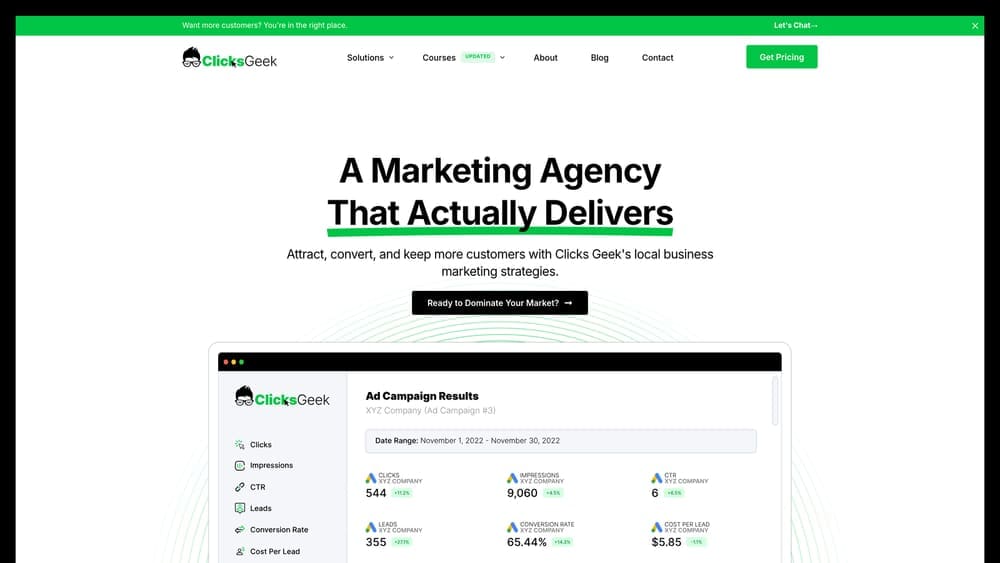
Clicks Geek CRO Services is a done-for-you conversion rate optimization service that combines strategic expertise with testing execution, focused on delivering measurable revenue growth rather than vanity metrics.
Where This Service Shines
The biggest challenge most businesses face with CRO platforms isn’t the technology—it’s knowing what to test and how to interpret results. You can buy the best testing tool available, but without expertise, you’ll waste months testing button colors instead of addressing real conversion barriers.
This service solves that problem by handling strategy, implementation, and analysis. As a Google Premier Partner Agency, the team brings PPC and paid advertising expertise into the optimization process, creating alignment between traffic sources and landing page experiences. That integration matters because conversion optimization doesn’t happen in isolation from your acquisition channels.
Key Features
Full-Service Management: No need to hire specialists, learn platforms, or manage testing calendars—the team handles everything from hypothesis development to implementation.
Revenue-Focused Approach: Testing prioritizes changes that impact bottom-line revenue, not engagement metrics that don’t translate to business growth.
PPC Integration: Optimization considers the entire funnel from ad click to conversion, ensuring message match and experience consistency.
Google Premier Partner Expertise: The agency status signals proven performance standards and direct platform relationships that benefit clients.
Best For
Local businesses and mid-sized companies that recognize conversion optimization matters but don’t have the bandwidth or expertise to manage it internally. Particularly valuable if you’re already investing in paid advertising and want to maximize return without increasing ad spend.
Pricing
Custom pricing based on business size, traffic volume, and optimization scope. The investment includes both strategic expertise and execution, eliminating the need for separate platform subscriptions and specialist salaries.
2. VWO (Visual Website Optimizer)
Best for: Mid-market companies wanting comprehensive testing and analytics in one platform
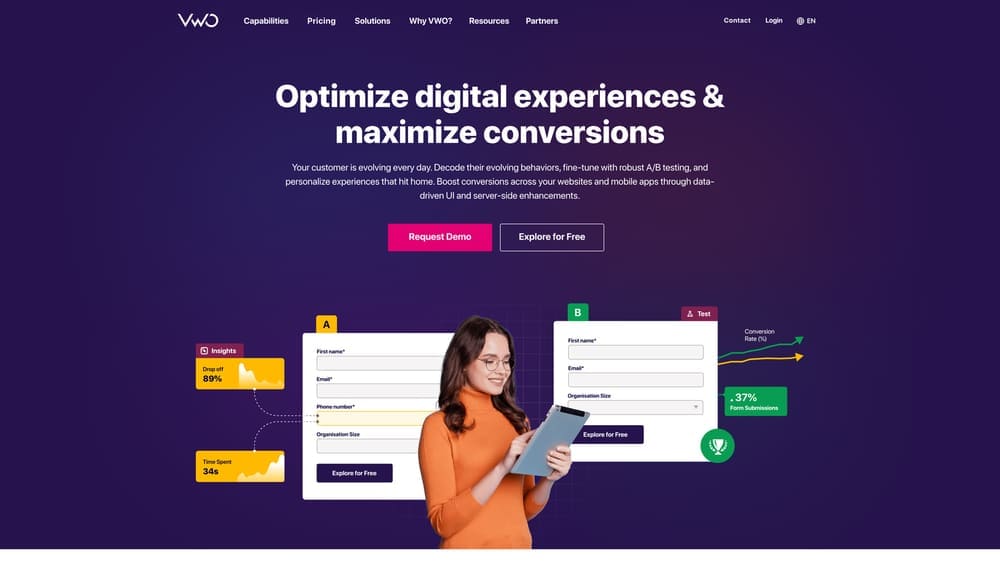
VWO is a full-suite experimentation platform that combines A/B testing, multivariate testing, personalization, and behavioral analytics without requiring multiple tool subscriptions.
Where This Platform Shines
VWO built its reputation on making sophisticated testing accessible to marketing teams, not just developers. The visual editor lets you create test variations by clicking and editing directly on your live site—no coding required for most changes.
What separates VWO from simpler tools is the depth available when you need it. You can start with basic A/B tests, then graduate to multivariate testing, server-side experiments, and advanced personalization as your optimization program matures. The platform includes heatmaps and session recordings, giving you the behavioral context you need to form test hypotheses rather than guessing what might work.
Key Features
Visual Editor: Point-and-click interface for creating test variations without developer involvement for most common changes.
Server-Side Testing: Run experiments on backend systems and APIs, not just frontend page elements, for deeper optimization opportunities.
Behavioral Analytics Included: Heatmaps, scrollmaps, and session recordings come standard, eliminating the need for separate analytics tools.
Advanced Targeting: Segment audiences by dozens of attributes including behavior, geography, device, and custom parameters for personalized experiences.
SmartStats Engine: Bayesian statistics approach provides faster, more reliable results than traditional frequentist methods, particularly for lower-traffic sites.
Best For
Marketing teams at companies running 50,000+ monthly visitors who want to own their optimization program but need tools accessible to non-technical users. Works well for businesses testing across multiple properties or wanting to combine testing with personalization.
Pricing
Growth plan starts around $199 monthly for basic testing capabilities. Pro and Enterprise tiers add advanced features like server-side testing and increased traffic limits. Annual commitments typically required for mid-tier and enterprise plans.
3. Optimizely
Best for: Enterprise organizations requiring statistical rigor and governance controls
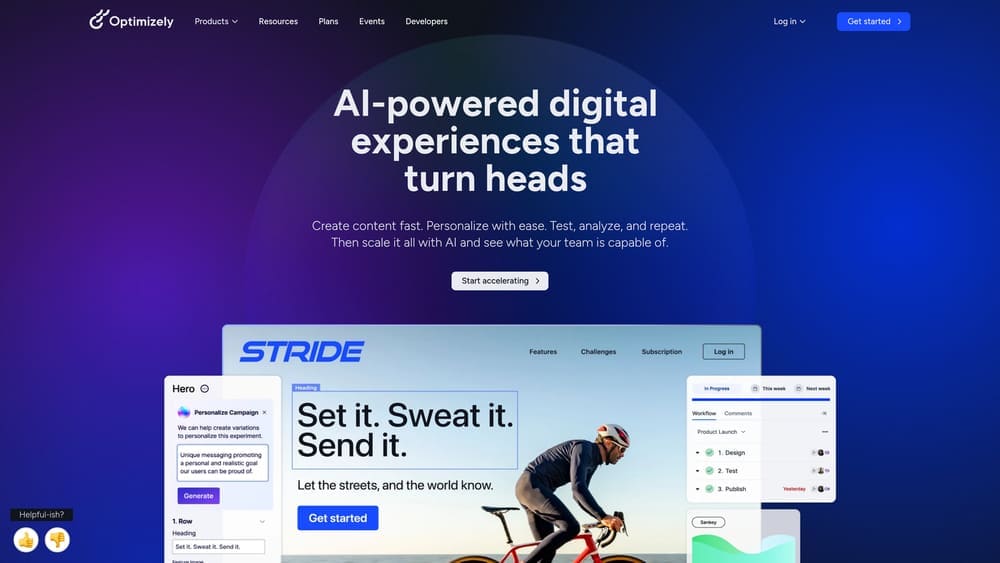
Optimizely is the enterprise-grade experimentation platform known for its Stats Engine, feature flagging capabilities, and the governance controls large organizations need for compliant testing at scale.
Where This Platform Shines
When your company runs dozens of concurrent experiments across multiple teams, you need more than testing tools—you need experimentation infrastructure. Optimizely built its platform for this reality, with features that prevent teams from accidentally running conflicting tests or making changes that break compliance requirements.
The Stats Engine deserves its reputation. It uses sequential testing methodology that lets you make decisions faster than traditional fixed-horizon approaches, while maintaining statistical validity. For enterprises where a 0.5% conversion lift represents millions in revenue, that statistical confidence matters enormously.
Key Features
Stats Engine: Sequential testing approach provides reliable results faster than traditional methods, with built-in protections against peeking bias.
Feature Flags: Deploy code changes gradually to user segments, enabling progressive rollouts and instant rollbacks if issues emerge.
Multi-Channel Experimentation: Test consistently across web, mobile apps, connected devices, and server-side systems from one platform.
Enterprise Security: SOC 2 Type II compliance, SSO integration, role-based permissions, and audit trails meet corporate security requirements.
Program Management: Centralized experiment calendar, automated conflict detection, and results aggregation for program-level insights.
Best For
Large enterprises with dedicated experimentation teams, multiple digital properties, and the traffic volume to support sophisticated testing programs. Companies in regulated industries appreciate the compliance and governance capabilities built into the platform architecture.
Pricing
Custom enterprise pricing based on traffic volume, feature requirements, and support level. Expect significant investment—this platform targets organizations where experimentation is a core competency, not an occasional activity.
4. AB Tasty
Best for: Marketing teams needing fast experimentation without heavy developer dependencies
AB Tasty is an experimentation platform designed specifically for marketing teams who need to move quickly, with low-code widgets and AI-powered recommendations that reduce the technical barriers to testing.
Where This Platform Shines
Think of AB Tasty as the platform built for marketing velocity. While enterprise tools prioritize governance and control, AB Tasty prioritizes speed—how quickly can your marketing team go from idea to live test without waiting for development resources?
The widget library gives you pre-built components for common optimization scenarios: urgency timers, social proof notifications, exit-intent popups, and product recommendations. Instead of designing and coding these elements from scratch, you configure them. The AI recommendation engine analyzes your site and suggests specific tests based on patterns it identifies, which helps teams who struggle with the “what should we test?” question.
Key Features
Low-Code Widget Library: Pre-built components for urgency, social proof, recommendations, and other conversion elements that deploy without custom development.
AI-Powered Recommendations: Machine learning analyzes your site patterns and suggests specific tests likely to impact conversion rates.
Emotion AI: Sentiment analysis capabilities measure emotional response to different experiences, adding qualitative context to quantitative results.
Hybrid Testing: Supports both client-side and server-side testing, letting you choose the right approach for each experiment.
Personalization Engine: Deliver different experiences based on visitor attributes, behavior, or predicted intent without building custom logic.
Best For
Mid-market companies with active marketing teams but limited development resources. E-commerce businesses particularly benefit from the product recommendation and urgency widgets that address common conversion barriers without custom builds.
Pricing
Custom pricing targeting mid-market budgets. The platform positions between entry-level tools and enterprise platforms, with pricing that reflects that positioning—expect investment higher than basic tools but lower than enterprise solutions.
5. Convert
Best for: Privacy-conscious businesses and agencies serving clients in regulated industries
Convert is a privacy-first A/B testing platform built specifically for businesses and agencies that need GDPR, CCPA, and HIPAA compliance without compromising testing capabilities.
Where This Platform Shines
Most testing platforms collect visitor data as a core part of their functionality. Convert took a different approach—they architected the platform to run effective tests while minimizing personal data collection, making compliance simpler rather than an afterthought.
For agencies, the unlimited team members feature changes the economics. You can give every client access without per-seat charges eating into margins. The flicker-free testing technology matters more than it sounds—when visitors see page elements jump or flash during test loading, it degrades experience and skews results. Convert’s implementation eliminates that problem.
Key Features
Privacy-by-Design Architecture: Platform built from the ground up to minimize personal data collection while maintaining testing effectiveness.
No Personal Data Storage Option: Configure experiments to run without storing any personally identifiable information, simplifying compliance requirements.
Unlimited Team Members: Add clients, contractors, and team members without per-seat pricing, particularly valuable for agencies managing multiple accounts.
Flicker-Free Technology: Advanced implementation prevents the page flash that occurs when test variations load, maintaining user experience quality.
Full-Stack Testing: Supports client-side, server-side, and hybrid testing approaches depending on technical requirements.
Best For
Agencies managing multiple client accounts, businesses serving EU customers where GDPR compliance is critical, and companies in healthcare or financial services requiring HIPAA or similar regulatory compliance. Also suits businesses philosophically committed to privacy-first approaches.
Pricing
Starts at $99 monthly for the basic plan supporting up to 50,000 tested visitors. Higher tiers add features and traffic capacity. The unlimited team members feature applies across all plan levels, making it cost-effective for agencies and larger teams.
6. Crazy Egg
Best for: Small businesses starting with behavior analytics before advancing to testing
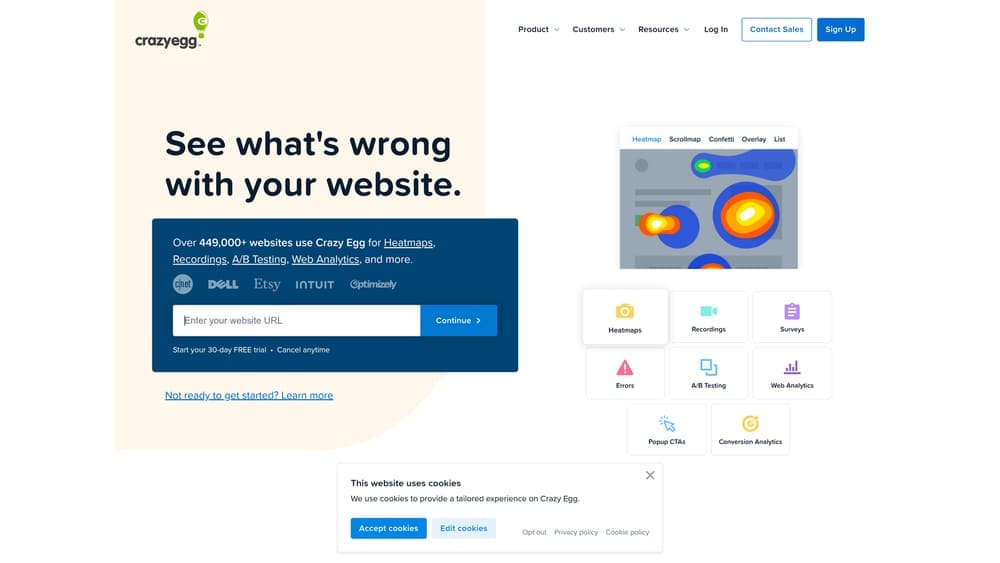
Crazy Egg is a visual analytics tool that specializes in showing you how visitors actually use your site through heatmaps, scrollmaps, and click tracking, with basic A/B testing included.
Where This Platform Shines
Here’s the thing about conversion optimization: you need to understand the problem before you can test solutions. Crazy Egg focuses on that discovery phase, making visitor behavior visible in ways raw analytics can’t.
Heatmaps show you where people click, how far they scroll, and which elements get attention versus which get ignored. That visual feedback often reveals surprising patterns—buttons you thought were obvious that nobody clicks, content you buried that everyone scrolls to find, form fields where people consistently abandon. The snapshots feature lets you compare behavior across time periods, helping you spot when changes (intentional or accidental) impact user behavior.
Key Features
Heatmaps and Scrollmaps: Visual representation of click patterns, attention, and scroll depth that reveals how visitors actually interact with your pages.
Session Recordings: Watch actual visitor sessions to see friction points, confusion, and behavior patterns that aggregate data misses.
Basic A/B Testing: Simple split testing capabilities included, letting you validate optimization ideas without separate testing tools.
Snapshots: Save historical views of behavior patterns for comparison across time periods or after site changes.
Best For
Small businesses and startups in the early stages of optimization who need to understand visitor behavior before investing in sophisticated testing platforms. Works well for sites with moderate traffic where visual analytics provide more immediate value than statistical testing.
Pricing
Plans start at $29 monthly for basic features and limited page views. Higher tiers add more tracked pages, recordings, and traffic capacity. The entry price point makes it accessible for small businesses testing whether conversion optimization delivers value before committing to larger investments.
7. Hotjar
Best for: Understanding the “why” behind visitor behavior through feedback and recordings
Hotjar is a behavior analytics platform that combines quantitative data (heatmaps, recordings) with qualitative feedback (surveys, polls) to help you understand not just what visitors do, but why they do it.
Where This Platform Shines
Most analytics tools show you the what—visitor X abandoned at step Y. Hotjar adds the why through direct feedback mechanisms. The on-site survey widgets let you ask visitors about their experience while it’s happening, capturing context that post-visit surveys miss.
The generous free tier deserves mention because it changes the adoption equation. You can start using Hotjar immediately without budget approval, see value, then upgrade when you hit the free tier limits. That removes the friction that prevents many businesses from starting with behavior analytics at all. The combination of heatmaps, recordings, and feedback tools in one platform means you’re not stitching together insights from multiple sources.
Key Features
Heatmaps and Recordings: See where visitors click, move, and scroll, then watch actual sessions to understand behavior in context.
On-Site Feedback Widgets: Collect visitor input through targeted surveys that appear based on behavior, page, or timing triggers.
Survey and Poll Tools: Create detailed surveys or quick polls to gather specific feedback about features, content, or experience.
Generous Free Tier: Permanently free plan includes basic heatmaps and recordings, letting you start without financial commitment.
Best For
Businesses that recognize they need to understand visitor perspective, not just track visitor actions. Particularly valuable for companies with complex products or services where visitor confusion or questions create conversion barriers that analytics alone can’t diagnose.
Pricing
Free tier available with basic features and limited sessions. Paid plans start at $32 monthly, scaling based on daily session limits and feature access. The free tier provides genuine utility rather than just being a trial, making it viable for small sites indefinitely.
8. Google Optimize Alternatives
Best for: Businesses needing migration paths after Google Optimize sunset
When Google Optimize shut down in September 2023, thousands of businesses suddenly needed new testing solutions. Several platforms emerged as migration targets, with options ranging from free open-source tools to low-cost commercial alternatives.
Where These Alternatives Shine
The Optimize shutdown created opportunity for platforms that address the specific needs Optimize served—free or low-cost testing for small to mid-sized businesses who don’t need enterprise features. Growthbook offers an open-source experimentation platform you can self-host, giving you full control and zero platform fees if you have technical resources.
PostHog combines product analytics with experimentation features in their free tier, making it viable for startups and small products. Microsoft Clarity provides free behavior analytics including heatmaps and session recordings, though it lacks testing capabilities. Several commercial platforms launched migration programs offering discounted pricing for former Optimize users, recognizing the opportunity to capture that displaced user base.
Key Features
Growthbook Open Source: Self-hosted experimentation platform with no platform fees, requiring technical setup but providing full control and customization.
PostHog Free Tier: Combines product analytics, session recordings, and experimentation features in a generous free tier suitable for small products.
Microsoft Clarity: Completely free behavior analytics including heatmaps and recordings, though without testing capabilities.
Migration Assistance: Many commercial platforms offer migration programs, documentation, and support specifically for former Optimize users.
Best For
Former Google Optimize users seeking comparable functionality without jumping to expensive enterprise platforms. Startups and small businesses wanting to start optimization without significant budget allocation. Technical teams comfortable with open-source tools who want maximum control.
Pricing
Ranges from completely free (Clarity, Growthbook self-hosted, PostHog free tier) to low-cost entry plans from commercial alternatives. The diversity of options means businesses can match their budget and technical capabilities rather than being forced into enterprise pricing.
9. Unbounce
Best for: Marketers who need landing page creation and optimization in one platform
Unbounce is a landing page platform with built-in A/B testing and Smart Traffic AI that automatically optimizes which page variant each visitor sees based on predicted conversion likelihood.
Where This Platform Shines
Most testing platforms assume you already have pages to test. Unbounce combines page creation with optimization, which matters if you’re running campaigns that need dedicated landing pages. The drag-and-drop builder lets marketers create and launch pages without developer involvement.
Smart Traffic is where Unbounce differentiates from simple landing page builders. Instead of manually splitting traffic between variants and waiting for statistical significance, the AI learns which visitor attributes correlate with conversion for each variant, then automatically routes visitors to the version most likely to convert them. For campaigns with limited traffic where traditional A/B tests would take months to reach significance, this approach delivers faster optimization.
Key Features
Drag-and-Drop Builder: Create landing pages without coding using a visual editor with templates optimized for conversion.
Smart Traffic AI: Machine learning automatically routes each visitor to the page variant most likely to convert them based on their attributes.
Popups and Sticky Bars: Add overlays and persistent elements to existing pages without modifying the underlying site.
Ad Platform Integrations: Direct connections to Google Ads, Facebook Ads, and other platforms for seamless campaign tracking.
Dynamic Text Replacement: Automatically customize page content based on the ad or keyword that brought the visitor, improving message match.
Best For
Marketing teams running paid advertising campaigns who need to create, test, and optimize landing pages quickly. Agencies managing multiple client campaigns benefit from the ability to rapidly deploy and test pages without development resources. Less suitable if you need to optimize existing website pages rather than creating new landing pages.
Pricing
Plans start at $99 monthly for basic features and limited landing pages. Higher tiers add more pages, traffic capacity, and advanced features like Smart Traffic. Annual commitments typically provide 20-25% savings compared to monthly billing.
Making the Right Choice
Choosing the right conversion optimization platform depends on three factors: your technical resources, your budget, and how mature your optimization program is.
For local businesses and companies focused on growth without building an in-house CRO team, a done-for-you service delivers faster results. You get strategic expertise combined with execution, avoiding the months of learning curve that come with DIY optimization. The investment replaces both platform costs and the salary of specialists you’d need to hire.
If you have development resources and want full control over your experimentation program, enterprise platforms like Optimizely or VWO offer the deepest capabilities. They’re built for organizations where optimization is a core competency, with dozens of concurrent tests and dedicated teams. The investment makes sense when small conversion lifts represent significant revenue.
Mid-market companies often find the sweet spot with AB Tasty or Convert—powerful enough for serious testing, accessible enough for marketing teams to operate independently. These platforms balance capability with usability, letting you run sophisticated experiments without enterprise complexity or price tags.
Start by identifying your biggest conversion bottleneck. Is it understanding why visitors leave? Use behavior analytics like Hotjar or Crazy Egg first. Is it testing solutions once you understand the problem? Then you need actual testing capability. Is it creating landing pages for campaigns? Unbounce combines both creation and optimization.
Choose the platform that addresses your specific challenge rather than buying features you won’t use. A simple tool you actually use beats a sophisticated platform that sits unused because it’s too complex for your team.
Tired of spending money on marketing that doesn’t produce real revenue? We build lead systems that turn traffic into qualified leads and measurable sales growth. If you want to see what this would look like for your business, we’ll walk you through how it works and break down what’s realistic in your market.