Your ad budget just hit zero for the month. Again. The agency sent another colorful report filled with charts showing “impressions up 47%!” and “click-through rate improved!” But when you check your bank account, the phone isn’t ringing more. Your sales pipeline looks exactly the same as it did three months ago. You’re paying someone to manage your PPC campaigns, yet somehow you’re still not getting the customers you need to grow.
This scenario plays out every single day for business owners who chose the wrong PPC management company. They picked based on a slick sales pitch, an attractive price point, or simply because they were overwhelmed and needed someone—anyone—to take the ads off their plate. The result? Months of wasted ad spend, burned leads from poor targeting, and the crushing realization that you’re no closer to your growth goals than when you started.
For local businesses focused on customer acquisition and profitable scaling, choosing the right PPC partner isn’t just important—it’s make-or-break. A skilled agency can transform your lead generation practically overnight, dialing in your targeting so precisely that every dollar you spend returns two or three. But a mediocre one will drain your resources while delivering reports that look impressive but mean nothing to your bottom line.
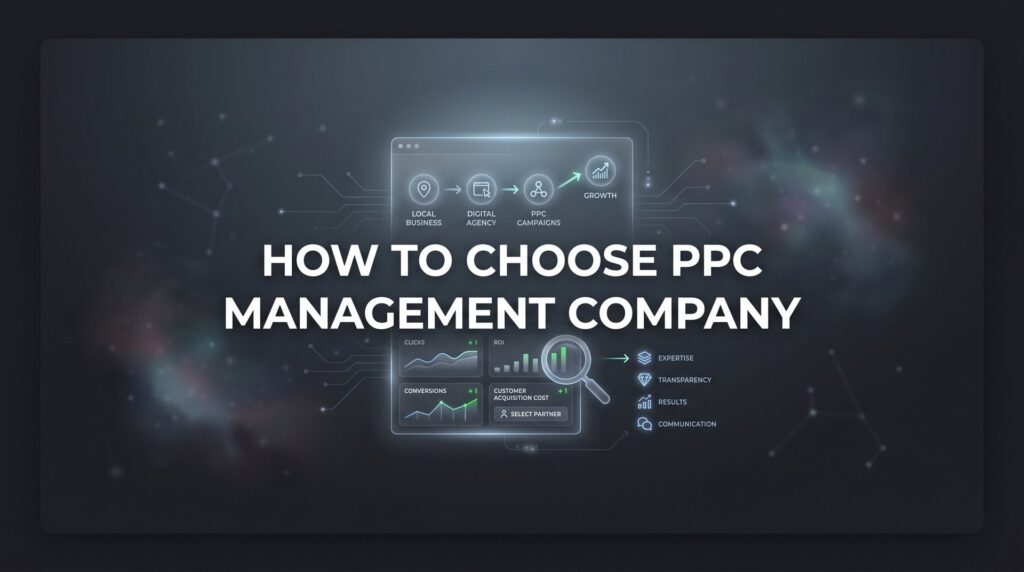
The good news? There’s a systematic way to evaluate PPC management companies that separates the genuine experts from the smooth talkers. This guide walks you through the exact six-step process successful business owners use to find a PPC partner who treats your money like their own and obsesses over your profitability as much as you do. By the end, you’ll know exactly which questions to ask, which red flags to watch for, and how to structure a partnership that actually moves your business forward.
Step 1: Define Your Goals and Budget Before You Start Looking
Here’s where most business owners get this wrong: they start shopping for a PPC agency before they know what they’re actually shopping for. They schedule calls with agencies and get dazzled by presentations about “multi-channel strategies” and “advanced audience segmentation” without first clarifying what success actually looks like for their business.
Start by getting crystal clear on your specific objective. Are you hunting for qualified leads that your sales team can close? Do you need direct online sales? Are you trying to drive phone calls to your location? Each of these goals requires different PPC expertise, platform selection, and measurement approaches. An agency brilliant at ecommerce conversion optimization might be completely wrong for a local service business that needs phone call tracking and appointment booking.
Next, establish your realistic budget—and this means two numbers, not one. First, determine your monthly ad spend budget (the money that actually goes to Google, Facebook, or other platforms). Then, factor in the management fee you’ll pay the agency. Industry standards typically range from 10-20% of your ad spend, or flat monthly fees starting around $500-2000 for smaller businesses. If you’re planning to spend $3,000 monthly on ads, expect to pay an additional $300-600 in management fees, or potentially a flat $1,000-1,500 depending on the agency’s structure. Understanding monthly PPC management fees upfront helps you budget accurately.
Before you talk to a single agency, document your current performance metrics. What’s your cost per lead right now? What’s your conversion rate from lead to customer? What’s your average customer value? If you’re currently running ads yourself or with another agency, pull these numbers. If you’re starting from scratch, research benchmarks for your industry. This baseline becomes your measuring stick for improvement.
Finally, set specific, concrete targets that give agencies something real to evaluate. “I want more leads” is useless. “I want 50 qualified leads per month at under $75 each, with at least a 20% close rate to customers” gives an agency the information they need to tell you whether your goals are realistic and how they’d achieve them. This specificity also reveals which agencies actually understand your business model and which ones are just nodding along to get the contract signed.
Step 2: Research and Shortlist Agencies With Relevant Experience
Not all PPC experience is created equal. An agency that crushes it for ecommerce brands selling $50 products might be completely lost helping a local HVAC company generate service calls. The platforms, strategies, audience targeting, and conversion tracking required for different business models vary dramatically.
Start your research by looking specifically for agencies with proven experience in your industry or business model. If you run a local service business, you want an agency that understands local search intent, call tracking, and service area targeting. If you’re B2B with a long sales cycle, you need someone who gets lead nurturing and multi-touch attribution. Don’t be impressed by agencies showing off their work with Fortune 500 brands if you’re a local business with a $5,000 monthly budget—you need someone who excels at your scale and your market. Reviewing best PPC management companies can help you identify agencies with relevant track records.
Check for Google Partner or Premier Partner status as a baseline credibility indicator. Google Partner status means the agency has met certification requirements and minimum spending thresholds. Premier Partner status represents the top 3% of participating agencies. This doesn’t guarantee excellence, but it does confirm they’re managing significant ad spend and maintaining Google’s standards. However, don’t stop your evaluation here—plenty of Partner agencies still deliver mediocre results.
Dig into their case studies, but look beyond the impressive brand logos. You want case studies featuring businesses similar to yours in size, market, and objectives. A case study showing “increased ROAS by 300%” for a national ecommerce brand tells you nothing about whether they can generate local leads for your business. Look for specific, relevant success stories with actual numbers tied to business outcomes you care about.
Verify they specialize in the platforms you need. If your customers are primarily on Facebook and Instagram, an agency that only does Google Ads won’t help you. If you need YouTube advertising, confirm they have dedicated YouTube specialists. Many agencies claim they “do it all” but really only excel at one or two platforms. You want specialists in the channels that matter for your business, not generalists who dabble everywhere.
Step 3: Evaluate Their Process and Communication Style
The agency’s sales pitch will always sound great. What matters is how they actually work once the contract is signed. The best way to predict this? Pay extremely close attention to their process and communication approach during the evaluation phase.
Ask detailed questions about their onboarding process. How do they learn your business, your competitors, and your customers? A strong agency will describe a thorough discovery process—interviewing you about your business model, analyzing your current marketing, researching your competitors’ strategies, and understanding your customer journey. Red flag: agencies that skip straight to “we’ll set up your campaigns and get started” without mentioning any discovery work.
Understand their reporting frequency and format before you commit. Will you get weekly calls to review performance? Monthly reports with strategic recommendations? Real-time dashboard access where you can check results anytime? There’s no universally “right” answer here—what matters is that their communication style matches your needs. If you’re hands-on and want weekly updates, an agency that only does quarterly reviews will frustrate you. If you prefer to stay high-level, an agency demanding daily check-ins will waste your time.
Clarify exactly who will manage your account day-to-day. Will you have a dedicated specialist who learns your business inside and out? Or will your account rotate between team members depending on who’s available? Dedicated account managers typically deliver better results because they develop deep expertise in your specific business, market, and what’s working. Rotating teams mean you’re constantly re-explaining your business and losing institutional knowledge. This is one reason many businesses prefer full service PPC management with dedicated teams.
Here’s the ultimate red flag test: during your initial conversations, does the agency ask YOU detailed, probing questions about your business? Or do they just pitch their services and tell you how great they are? Strong agencies interview you like they’re already working for you—asking about your margins, your sales process, your best customers, your competitive advantages. They’re trying to understand whether they can actually help you before they take your money. Weak agencies just want to close the deal and figure out the details later.
Step 4: Ask the Hard Questions That Reveal True Expertise
This is where you separate the experts from the pretenders. Anyone can talk about “optimizing campaigns” and “improving performance.” What you need to know is whether they understand the specific challenges in your market and have concrete strategies to address them.
Request specific strategies they would use for YOUR business. Not generic PPC best practices—actual tactics tailored to your situation. If you’re a local service business, how would they structure your geographic targeting? What ad copy angles would they test first? How would they handle your seasonal fluctuations? Vague answers like “we’d optimize your campaigns and improve your targeting” mean they haven’t thought seriously about your business. Specific answers with reasoning reveal genuine expertise.
Ask how they handle underperforming campaigns. What’s their optimization process when results aren’t meeting targets? How quickly do they make changes? What’s their testing methodology? You want to hear about systematic approaches—regular performance reviews, hypothesis-driven testing, clear decision frameworks for pausing or scaling campaigns. Be wary of agencies that say “we’ll just keep optimizing until it works” without explaining what that actually means. Learning how to optimize PPC campaigns yourself helps you evaluate whether their approach is sound.
Inquire about their approach to conversion tracking and attribution. This is technical but critical—if they can’t accurately track which ads are generating leads and sales, they can’t optimize effectively. How do they set up conversion tracking? Do they use call tracking for phone leads? How do they handle multi-touch attribution when customers interact with multiple ads before converting? Strong agencies will have detailed answers because they know tracking is the foundation of everything else.
Discuss contract terms directly. Are they offering month-to-month flexibility or requiring 6-12 month commitments? What happens if results don’t materialize—can you exit without penalties? What’s included in the management fee versus what costs extra? Get clarity on these business terms before you’re emotionally invested in working with them. The best agencies are confident enough in their results to offer reasonable exit options because they know you won’t want to leave.
Step 5: Verify Results With References and Account Ownership
Testimonials on an agency’s website are marketing. References you can actually call are evidence. Request 2-3 client references from businesses similar to yours that you can speak with directly. Strong agencies will provide these readily because they know their clients will vouch for them. Reading PPC management agency reviews can also give you insight into real client experiences.
When you call references, ask specific questions. How’s the communication? Do they respond quickly when issues come up? Did results match what was promised during the sales process? How long did it take to see meaningful improvements? Have there been any problems, and how did the agency handle them? You’re not looking for perfection—you’re looking for patterns of responsiveness, honesty, and delivering on commitments.
Before signing anything, confirm YOU will own your ad accounts, your data, and your conversion tracking setup. This is non-negotiable. You should have full admin access to your Google Ads account, your Facebook Business Manager, and any tracking platforms. Some agencies try to maintain control of accounts or use proprietary systems that lock in your data. This makes switching agencies later nearly impossible and gives them leverage they shouldn’t have. Reputable agencies will set up accounts in your name and give you complete access because they’re confident you’ll stay based on results, not because you’re trapped.
Ask references how long they’ve been working with the agency. Client retention tells you a lot. If most clients leave after 3-6 months, that’s a red flag suggesting results don’t match promises or service quality drops after the initial push. If clients have been with the agency for years, that indicates consistent performance and good working relationships. High turnover signals problems you’ll likely experience too.
Step 6: Compare Proposals and Make Your Decision
You’ve done your research, asked the hard questions, and received proposals from your shortlisted agencies. Now comes the actual decision. Don’t make the mistake of choosing based solely on price—this is one area where cheapest almost always means least experienced or least effective. Understanding different PPC management pricing models helps you compare proposals more effectively.
Evaluate proposals on strategy depth, not just the bottom-line number. A detailed proposal that outlines specific campaign structures, targeting strategies, testing plans, and success metrics is worth more than a cheaper proposal that just lists services. The agency that took time to develop a thoughtful strategy before you even hired them will likely bring that same level of care to your actual campaigns.
Look for agencies that tie their success to YOUR success. Some agencies offer performance bonuses where they earn more when you hit targets. Others provide transparent reporting with direct access to raw data so you can verify results yourself. These structures align incentives—the agency makes more money when you make more money. Be cautious of agencies that focus entirely on hours worked or tasks completed rather than outcomes achieved. Exploring Google Ads management services can help you understand what top agencies typically include in their offerings.
Trust your gut on cultural fit. You’ll be working closely with these people, sharing sensitive business information, and depending on them for a critical part of your growth strategy. If something feels off during the sales process—they’re pushy, dismissive of your questions, or just don’t seem to “get” your business—it won’t improve after you sign the contract. Choose an agency where the communication feels natural and you genuinely believe they care about your success.
Start with a defined trial period before committing long-term. Even with all your research, you won’t truly know how an agency performs until you work with them. Structure an initial 3-month engagement with clear success metrics. This gives both sides a chance to evaluate the partnership with lower risk. If results are strong and the relationship works well, extend it. If not, you can part ways without being locked into a year-long contract that isn’t working.
Making the Final Call
Choosing a PPC management company ranks among the most impactful decisions you’ll make for your business growth. The right partner can transform your customer acquisition, turning your ad spend into a reliable, scalable growth engine. The wrong one can waste months of time and tens of thousands of dollars while you spin your wheels getting nowhere.
Before you sign any contract, run through this final checklist: ✓ Your goals and budget are clearly defined with specific targets ✓ The agency has relevant, proven experience in your industry and business model ✓ Their communication style and reporting frequency match your needs ✓ They asked detailed questions about YOUR business during evaluation ✓ You’ve spoken with references and verified positive experiences ✓ You will own your ad accounts, data, and tracking ✓ Contract terms are fair with reasonable exit options if results don’t materialize
The right PPC management company doesn’t just run your ads—they become an extension of your team, obsessed with your profitability and growth just as much as you are. They bring expertise you don’t have, spot opportunities you’d miss, and optimize with a level of focus that’s impossible when you’re juggling everything else in your business.
Take your time with this decision. Ask the hard questions that make mediocre agencies uncomfortable. Push for specifics when you hear vague promises. And choose a partner that proves they’re genuinely invested in your success before you hand over the first dollar of ad spend.
The difference between a great PPC partner and a mediocre one isn’t just better reports or fancier dashboards. It’s the difference between campaigns that generate real revenue and campaigns that just generate activity. It’s the difference between growing your business and wondering why your marketing isn’t working. Make this choice carefully, and you’ll build a partnership that drives profitable growth for years to come.
Tired of spending money on marketing that doesn’t produce real revenue? We build lead systems that turn traffic into qualified leads and measurable sales growth. If you want to see what this would look like for your business, we’ll walk you through how it works and break down what’s realistic in your market.
Want More Leads for Your Business?
Most agencies chase clicks, impressions, and “traffic.” Clicks Geek builds lead systems. We uncover where prospects are dropping off, where your budget is being wasted, and which channels will actually produce ROI for your business, then we build and manage the strategy for you.