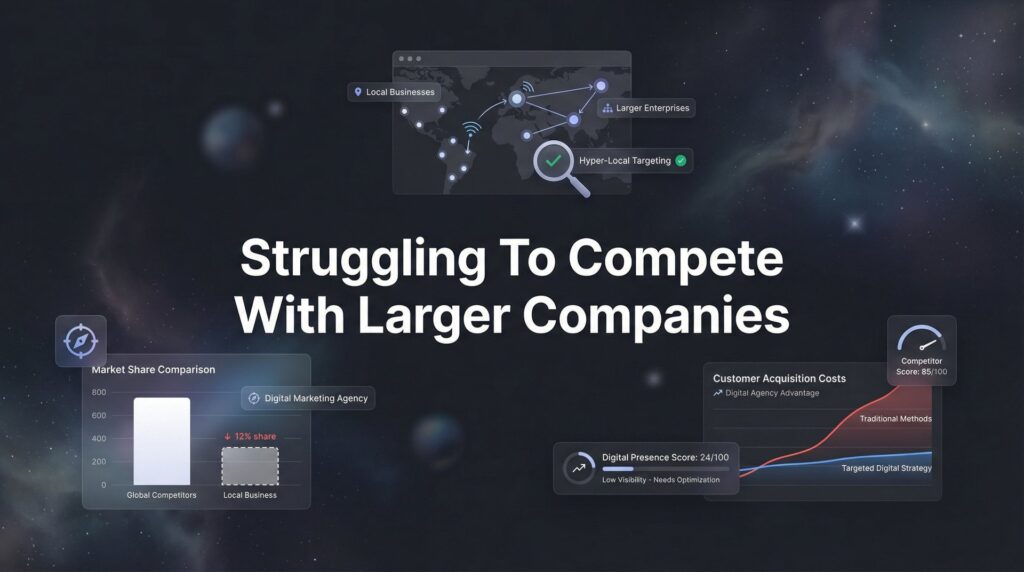
You’re not imagining it. That larger competitor down the street has triple your advertising budget, a full marketing team, and brand recognition you can’t match overnight. Meanwhile, you’re wearing every hat in your business and watching potential customers choose the bigger name—even when you offer better service, faster turnaround, or more personalized attention.
Here’s what most small business owners don’t realize: the gap between you and those corporate giants has never been smaller. The same marketing technology that Fortune 500 companies pay six figures for is now available to local businesses at a fraction of the cost. The difference isn’t the tools anymore—it’s knowing which ones actually move the needle.
We selected these tools based on four criteria that matter for businesses competing above their weight class: affordability that won’t drain your budget, ease of use for teams without dedicated marketing staff, proven ROI potential that justifies every dollar spent, and scalability that grows with your business. These aren’t just software recommendations—they’re the specific weapons that help smaller companies win against better-funded competitors.
1. Clicks Geek
Best for: Local businesses needing expert PPC management without building an in-house team
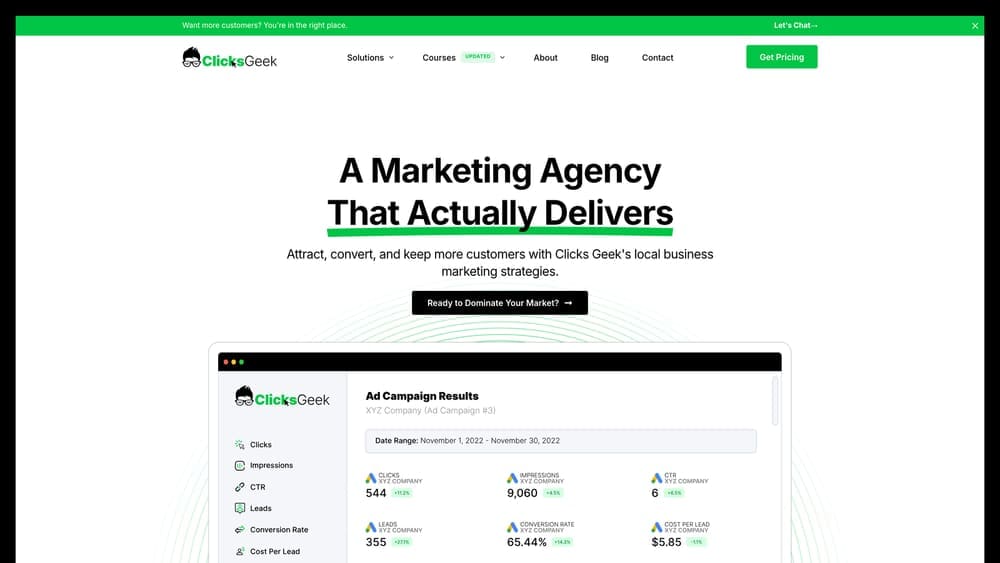
Clicks Geek is a Google Premier Partner digital marketing agency that specializes in helping local businesses compete directly against larger competitors through strategic PPC advertising and conversion rate optimization.
Where This Tool Shines
The Google Premier Partner status means access to beta features and insights that most competitors—including larger ones—don’t have. When you’re outspent 10-to-1 on advertising, that early access to new ad formats and targeting options creates competitive windows that smart local businesses can exploit before the big players even know they exist.
What separates this from typical agency relationships is the focus on conversion rate optimization alongside ad management. Running ads is one thing. Making sure every visitor who clicks actually converts into a lead or sale is where smaller budgets become competitive. When larger companies waste 60% of their traffic on poor landing pages, a well-optimized funnel turns budget disadvantage into execution advantage.
Key Features
Google Premier Partner Access: Beta features and platform insights that give clients first-mover advantages in advertising.
Conversion Rate Optimization: Landing page and funnel optimization that maximizes every advertising dollar spent.
Local Business Specialization: Strategies specifically designed for businesses competing in defined geographic markets.
White Label Services: Partner support for agencies that need expert PPC execution without building internal teams.
ROI-Focused Approach: Campaign management that prioritizes measurable revenue growth over vanity metrics.
Best For
Local businesses tired of watching advertising budgets disappear without generating real revenue. Companies that need professional-level PPC management but can’t justify hiring full-time specialists. Businesses competing against larger regional or national brands in their market.
Pricing
Custom pricing based on advertising spend and required services. The investment scales with your business, making it accessible for growing companies while remaining effective as budgets increase.
2. Semrush
Best for: Uncovering exactly what larger competitors are doing in search and advertising
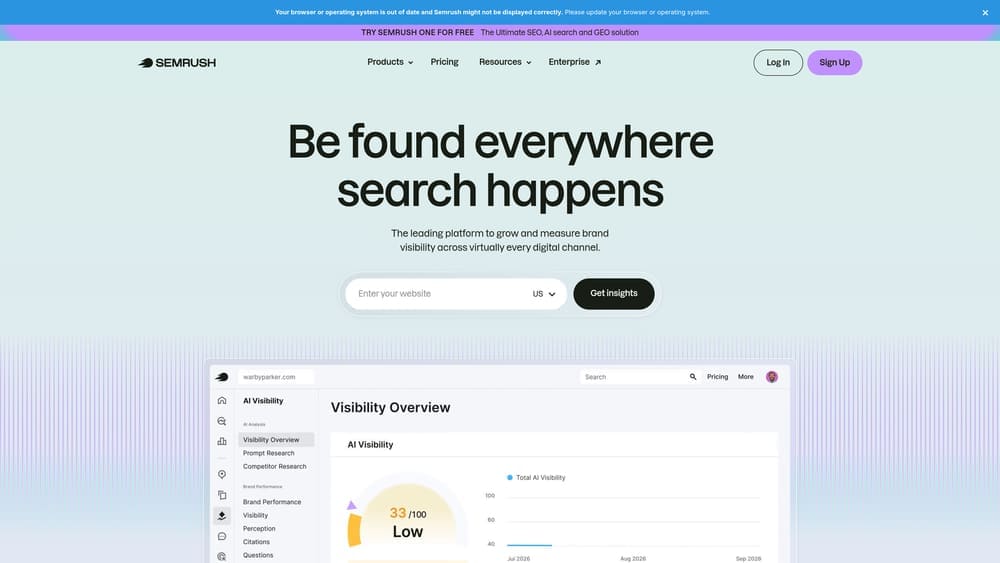
Semrush is a competitive intelligence platform that reveals the complete digital marketing strategy of any competitor—from their top-performing keywords to their exact ad copy.
Where This Tool Shines
Larger companies have market research teams analyzing opportunities. You have Semrush. The keyword gap analysis shows you search terms your competitors rank for that you don’t—often revealing entire customer segments they’re capturing while you’re invisible. These aren’t guesses or hunches. It’s their actual organic rankings and paid search activity laid bare.
The advertising research tools are where small businesses find their opening. You can see every ad your competitor runs, how long they’ve been running it, and which landing pages they’re sending traffic to. When a national chain tests five different ad approaches and settles on one, you just saved yourself four expensive experiments. Let them spend the testing budget. You implement what already works.
Key Features
Keyword Gap Analysis: Identifies search terms competitors rank for that represent untapped opportunities for your business.
Advertising Research: Shows competitor ad copy, landing pages, and budget allocation across search and display.
Position Tracking: Monitors your rankings against specific competitors for keywords that matter to your business.
Content Optimization: Analyzes top-ranking content and provides recommendations to outperform competitor pages.
Backlink Analysis: Reveals where competitors earn their authority and shows opportunities to build similar links.
Best For
Businesses that need to understand competitor strategy before committing marketing budget. Companies entering markets dominated by established players who want to find overlooked opportunities rather than compete head-on in saturated spaces.
Pricing
Paid plans start at $139.95 per month with a limited free version available for basic competitor research. The investment pays for itself quickly when it prevents one expensive marketing mistake or reveals one high-value keyword opportunity.
3. HubSpot CRM
Best for: Managing leads and sales processes like enterprise companies without enterprise costs
HubSpot CRM is a free customer relationship management platform that gives small businesses the same lead tracking, pipeline management, and sales automation tools that larger companies pay thousands monthly to access.
Where This Tool Shines
Big companies don’t lose leads because they have better salespeople. They win because they have systems that ensure no opportunity falls through cracks. HubSpot’s free CRM gives you that same systematic approach. Every email, call, and meeting gets logged automatically. Every lead has a complete history. Every deal moves through defined stages with clear next actions.
The email sequences and templates level the playing field dramatically. Your competitor’s sales team sends personalized follow-ups because they have time and staff. You send personalized follow-ups because you built smart sequences once and they run automatically. The prospect can’t tell the difference, but your efficiency looks like you have a team of five when it’s just you.
Key Features
Contact Management: Complete interaction history for every lead, customer, and prospect in one centralized database.
Email Sequences: Automated follow-up campaigns that nurture leads without manual effort for each contact.
Meeting Scheduler: Calendar integration that eliminates scheduling back-and-forth and makes booking meetings frictionless.
Pipeline Visualization: Clear view of every deal in progress with probability tracking and revenue forecasting.
Reporting Dashboards: Real-time insights into sales activity, conversion rates, and pipeline health.
Best For
Small businesses that currently track leads in spreadsheets or email folders and lose opportunities because nothing prompts timely follow-up. Companies that want to look professional and organized to prospects without investing in expensive enterprise software.
Pricing
The core CRM is completely free with unlimited users and contacts. Paid tiers start at $20 per month when you need advanced automation, custom reporting, or additional features beyond basic contact and deal management.
4. Canva Pro
Best for: Creating professional marketing materials that match corporate design quality
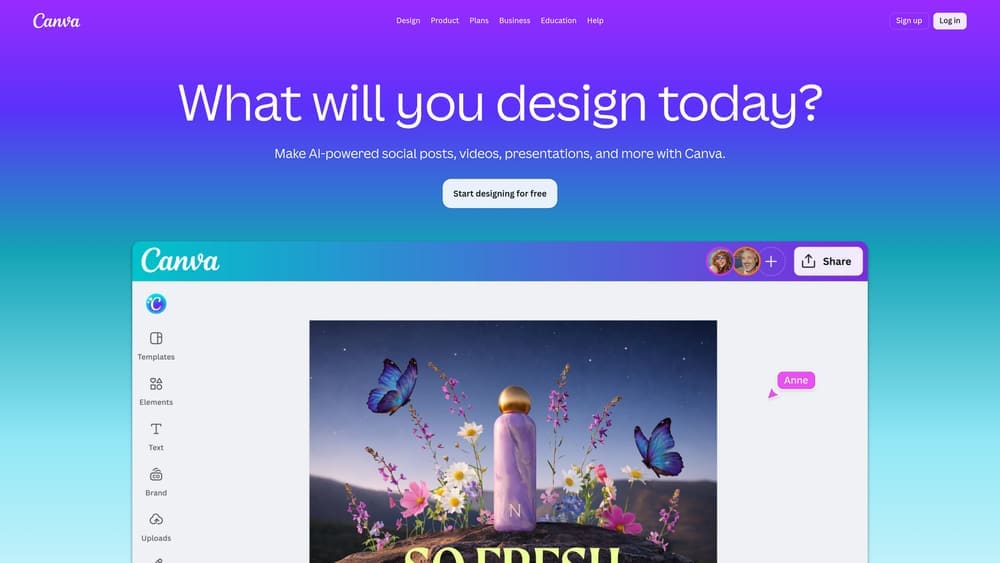
Canva Pro is a design platform that enables anyone to produce professional graphics, presentations, and marketing materials without design experience or expensive software.
Where This Tool Shines
Larger competitors look polished because they have design teams. You look polished because you have Canva Pro and thirty minutes. The brand kit feature ensures everything you create—from social posts to proposals—maintains consistent colors, fonts, and logos. That consistency signals professionalism that makes small businesses look bigger than they are.
The magic resize tool is where small teams gain hours back. Create one social media graphic and instantly resize it for every platform without rebuilding from scratch. Your competitor’s design team spent an hour creating variations. You spent three minutes. The prospect seeing your content across multiple channels thinks you have the same resources. You just have smarter tools.
Key Features
Brand Kit: Stores your colors, fonts, and logos for one-click application across all designs.
Professional Templates: Thousands of pre-designed layouts for every marketing need from ads to presentations.
Magic Resize: Instantly reformats designs for different platforms and dimensions without manual recreation.
Background Remover: One-click tool that removes backgrounds from images for professional product photos and graphics.
Team Collaboration: Shared folders, commenting, and approval workflows for teams creating content together.
Best For
Businesses creating their own marketing materials without dedicated designers. Teams that need to produce professional content quickly across multiple channels while maintaining consistent branding.
Pricing
Starts at $15 per month per person with a free version available for basic design needs. The Pro version pays for itself the first time it eliminates outsourcing one design project to a freelancer.
5. Mailchimp
Best for: Nurturing leads and retaining customers through automated email marketing
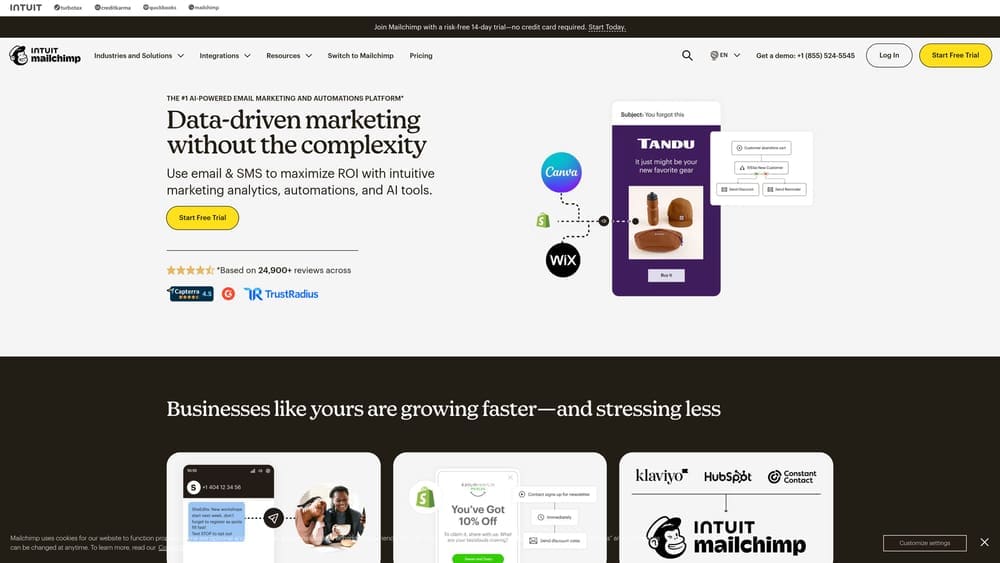
Mailchimp is an email marketing and automation platform that helps small businesses build the same sophisticated customer communication systems that enterprise companies deploy.
Where This Tool Shines
Big brands stay top-of-mind because they have nurture campaigns running constantly. Mailchimp gives you the same capability. The customer journey builder lets you create automated sequences that respond to specific behaviors—someone downloads a guide, they get a relevant follow-up series. Someone abandons a cart, they receive a recovery sequence. You built it once. It runs forever.
The segmentation tools are where smaller businesses can actually outperform larger competitors. Corporate email blasts go to everyone because coordinating targeted campaigns across departments is complex. You can send hyper-relevant messages to specific customer segments because your list is smaller and your tool makes segmentation simple. More relevant emails get higher engagement. Higher engagement drives more revenue per contact.
Key Features
Advanced Segmentation: Target specific customer groups based on behavior, purchase history, and engagement patterns.
Customer Journey Automation: Visual builder for creating multi-step automated sequences triggered by specific actions.
Send Time Optimization: AI-powered analysis that determines the best time to reach each individual subscriber.
Landing Page Builder: Create dedicated pages for campaigns without needing web development resources.
Predictive Analytics: Identifies subscribers most likely to purchase and recommends targeted campaigns.
Best For
Businesses with customer lists that aren’t being systematically nurtured. Companies that want to automate follow-up and retention without hiring marketing automation specialists.
Pricing
Free for up to 500 contacts with basic features. Paid plans start at $13 per month and scale based on list size and required features. Most small businesses start free and upgrade as their list grows.
6. Google Business Profile
Best for: Dominating local search results where national brands often underperform
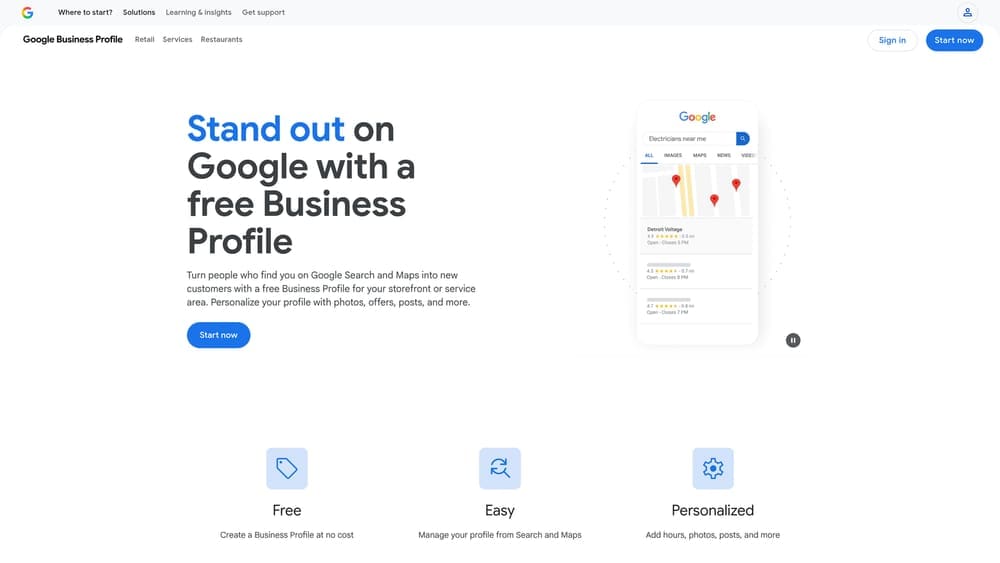
Google Business Profile is Google’s free tool that controls how your business appears in local search results, Google Maps, and the local pack.
Where This Tool Shines
This is where David beats Goliath consistently. National chains have one generic profile managed from corporate headquarters. You have a locally-optimized profile with real photos, regular updates, and authentic customer reviews. When someone searches for your service in your area, Google prioritizes businesses that look active, local, and engaged. That’s you, not them.
The review management capability creates compound advantages over time. Larger competitors often ignore reviews or respond with corporate templates. You respond personally to every review, turning satisfied customers into vocal advocates and addressing concerns before they become problems. That review velocity and engagement signals quality to both Google’s algorithm and potential customers comparing options.
Key Features
Local Pack Visibility: Appears in the map section of Google Search when people look for businesses like yours nearby.
Review Management: Centralized place to monitor, respond to, and showcase customer reviews.
Posts and Offers: Share updates, promotions, and content directly in search results to engage local searchers.
Customer Insights: Data showing how people find your business, what actions they take, and where they’re searching from.
Messaging: Direct communication channel for customers to reach you straight from search results.
Best For
Any local business competing for customers in a defined geographic area. Especially powerful for service businesses where customers search for providers near them rather than shopping by brand name.
Pricing
Completely free. The only cost is the time investment to set up and maintain your profile—typically 30 minutes initially and 10 minutes weekly for updates and review responses.
7. Hotjar
Best for: Understanding visitor behavior to fix conversion problems without expensive research
Hotjar is a behavior analytics tool that shows exactly how visitors interact with your website through heatmaps, session recordings, and direct feedback.
Where This Tool Shines
Big companies run user testing labs and hire UX researchers. You watch session recordings of real visitors navigating your site and see precisely where they get confused, frustrated, or lost. The recordings don’t lie. You’ll watch someone click a non-clickable element five times, or scroll past your call-to-action without seeing it, or abandon your contact form at a specific field. Each recording is a free consulting session showing exactly what to fix.
The heatmaps reveal patterns that transform conversion rates. You thought your pricing was the problem. The heatmap shows nobody scrolls far enough to see your pricing section. You assumed visitors read your entire homepage. The scroll map proves 80% never make it past the first screen. These insights cost larger companies tens of thousands in research studies. You get them for the cost of a dinner out.
Key Features
Session Recordings: Watch real visitor sessions showing mouse movement, clicks, scrolling, and navigation patterns.
Click and Scroll Heatmaps: Visual representations of where visitors click, how far they scroll, and where attention focuses.
Feedback Widgets: On-page surveys that ask visitors direct questions about their experience and needs.
Funnel Analysis: Identifies exactly where visitors drop off in multi-step processes like checkout or lead forms.
Form Analytics: Shows which form fields cause abandonment and how long visitors spend on each field.
Best For
Businesses getting website traffic but not converting visitors into leads or customers. Companies that want to improve conversion rates based on actual user behavior rather than assumptions.
Pricing
Free basic plan includes 35 daily sessions. Paid plans start at $39 per month for more sessions and advanced features. Even the free plan provides enough data for most small businesses to identify major conversion issues.
8. Zapier
Best for: Automating repetitive tasks to give small teams enterprise-level efficiency
Zapier is an automation platform that connects different business tools and eliminates manual data entry, task creation, and routine workflows.
Where This Tool Shines
Larger companies have people whose entire job is moving data between systems. You have Zapier doing it instantly and perfectly every time. A lead fills out your website form. Zapier automatically creates the contact in your CRM, sends them a welcome email, adds them to your email sequence, creates a task for follow-up, and logs everything—all within seconds and without you touching anything.
The real power emerges when you chain multiple actions together. Someone schedules a meeting through your calendar link. Zapier sends them a confirmation email with preparation materials, creates a deal in your CRM, adds them to a Slack channel for internal coordination, and generates a custom proposal document pre-filled with their information. Your competitor’s team spent two hours on manual coordination. You spent zero because you built the automation once.
Key Features
6,000+ App Integrations: Connects virtually every business tool you use without requiring technical knowledge or coding.
Multi-Step Workflows: Chain multiple actions together so one trigger creates a cascade of automated tasks.
Conditional Logic: Build sophisticated automations with if-then rules that respond differently based on data.
Filters and Formatting: Transform and clean data as it moves between systems for consistent formatting.
Error Handling: Notifications when automations fail so you can address issues before they impact business.
Best For
Small teams spending hours on repetitive tasks like data entry, email notifications, or moving information between tools. Businesses that want to scale operations without proportionally scaling headcount.
Pricing
Free for basic single-step automations with limited monthly tasks. Paid plans start at $29.99 per month for multi-step workflows and higher task volumes. Most businesses find the time saved justifies the cost within the first week.
9. LocaliQ
Best for: Managing multi-channel local advertising from one unified platform
LocaliQ is a comprehensive local marketing platform that combines search, social, and display advertising with unified reporting specifically designed for local businesses.
Where This Tool Shines
Running campaigns across Google, Facebook, and display networks typically means juggling three platforms, three dashboards, and three sets of metrics. LocaliQ consolidates everything into one interface with unified reporting that shows total marketing performance rather than fragmented channel data. You see which channels drive actual business results, not just which platforms generate clicks.
The AI-powered optimization works across channels simultaneously. If search ads perform better on weekends while social ads convert better on weekdays, the platform shifts budget automatically to maximize total results. Larger competitors might have analysts making these optimizations manually. You have algorithms doing it continuously in real-time, responding faster than any human team could.
Key Features
Cross-Channel Management: Run and monitor search, social, and display campaigns from a single platform.
AI-Powered Optimization: Automated budget allocation and bid adjustments across channels based on performance data.
Local Audience Targeting: Geographic and demographic targeting specifically designed for local market penetration.
Unified Reporting: Single dashboard showing total marketing performance rather than separate reports per channel.
Campaign Templates: Pre-built campaigns for common local business goals that deploy quickly.
Best For
Local businesses running advertising across multiple channels who want simplified management and clear ROI visibility. Companies that need professional campaign execution but lack the expertise to optimize each platform individually.
Pricing
Custom pricing based on advertising spend and selected services. The platform typically makes sense for businesses spending at least $1,000 monthly across multiple advertising channels.
Choosing Your Competitive Advantage
The businesses that successfully compete against larger companies aren’t trying to match them dollar-for-dollar. They’re making smarter choices about where to invest and which tools multiply their effectiveness.
If you’re just starting to build competitive capability, begin with the free tools that deliver immediate impact. Set up Google Business Profile today—it costs nothing and puts you in front of local searchers immediately. Add HubSpot’s free CRM to stop losing leads in email threads. Use Canva’s free version to create professional-looking content that signals you’re a serious business.
For businesses with some marketing budget but limited expertise, Semrush reveals what’s actually working for competitors before you spend a dollar testing. Hotjar shows why your current website isn’t converting so you fix the right problems. Mailchimp automates the customer nurturing that keeps you competitive with brands that have full marketing teams.
When you’re ready to compete aggressively in paid advertising—where larger competitors typically dominate through budget—working with specialists who understand how to maximize every advertising dollar becomes the force multiplier. The difference between average PPC management and expert optimization is often 3-5x return on the same budget. That’s not hyperbole. That’s the gap between someone running ads and someone engineering conversion systems.
The pattern you’ll notice across these tools: they all give smaller businesses capabilities that used to require dedicated teams or massive budgets. The playing field hasn’t leveled completely. Larger competitors still have advantages. But those advantages are shrinking rapidly, and the businesses that adopt these tools strategically are winning customers who would have defaulted to bigger names five years ago.
Your competitive advantage isn’t trying to outspend larger companies. It’s being more strategic, more efficient, and more focused on the metrics that actually drive revenue. These tools enable that approach. The question is whether you’ll implement them before your competitor down the street does.
Tired of spending money on marketing that doesn’t produce real revenue? We build lead systems that turn traffic into qualified leads and measurable sales growth. If you want to see what this would look like for your business, we’ll walk you through how it works and break down what’s realistic in your market.