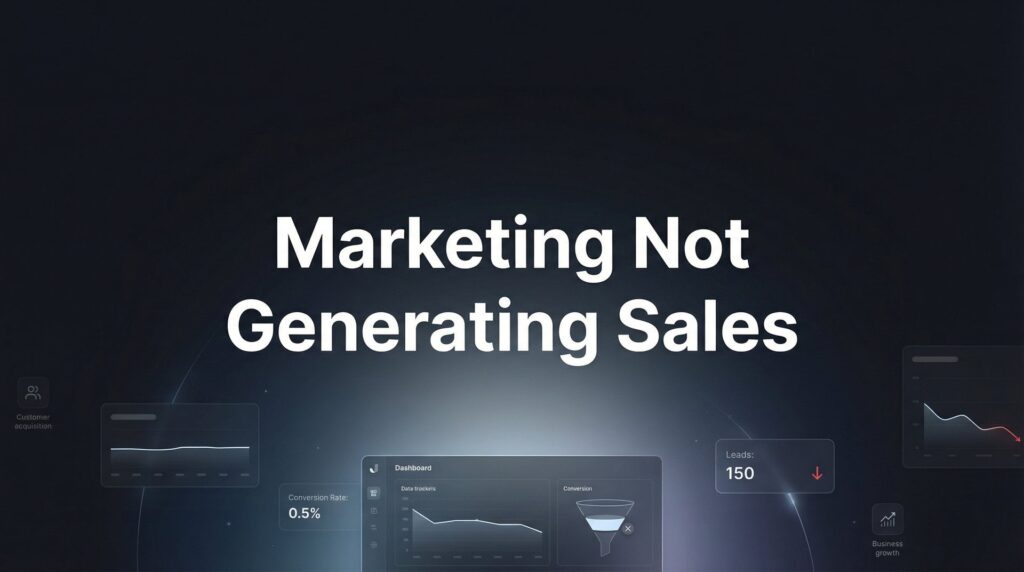
You’re spending $3,000 a month on Google Ads. Your Facebook campaign budget just hit $1,500. The SEO agency sends you colorful reports filled with traffic graphs trending upward. But here’s the question that keeps you up at night: Is any of this actually making you money?
Most business owners can’t answer that question with confidence. They know marketing costs money—they see the invoices every month. But connecting those expenses to actual revenue? That’s where things get fuzzy. You might hear reassurances about “building brand awareness” or “increasing engagement,” but those phrases don’t pay your bills or grow your business.
This is where ROI-focused digital marketing changes everything. It’s the practice of treating your marketing budget like the investment it is—tracking every dollar spent, measuring every result generated, and optimizing relentlessly for maximum return. As a Google Premier Partner agency, we’ve built our entire operation around this principle: marketing should pay for itself, or it shouldn’t exist. By the time you finish this guide, you’ll understand exactly how to shift from hope-based marketing to data-driven strategies that generate predictable, profitable growth.
What Makes ROI-Focused Marketing Different From Everything Else
ROI-focused digital marketing isn’t a buzzword or a trendy approach—it’s a fundamental methodology. At its core, it’s the practice of attributing every lead, sale, and customer back to specific marketing activities. You know exactly which campaign generated which customer, what that customer was worth, and whether the economics make sense.
Compare this to traditional marketing approaches where success gets measured in impressions, reach, and engagement rates. A campaign might deliver 50,000 impressions and feel successful until you realize none of those impressions converted into paying customers. These vanity metrics often mask serious underperformance because they measure activity instead of outcomes.
Think of it like investing in stocks. Would you ever put money into a stock without tracking whether it goes up or down? Would you keep investing in something that consistently loses value just because your broker sends you nice-looking reports about “market presence”? Of course not. Yet businesses do this with marketing all the time.
The core principle underlying ROI-focused marketing is simple but powerful: if you can’t measure it, you can’t improve it. And if you can’t improve it, you’re leaving money on the table. This means establishing clear tracking before spending your first dollar, defining what constitutes a valuable outcome, and building systems that connect marketing activities to business results.
When you operate this way, marketing stops being a mysterious expense and becomes a predictable growth engine. Understanding what performance marketing actually means helps you see that spending X dollars on a particular campaign will generate Y customers worth Z revenue. That certainty transforms how you approach business growth—suddenly, scaling becomes a matter of mathematics rather than guesswork.
The Four Foundation Pillars Every Performance Campaign Needs
Building a truly ROI-focused marketing operation requires getting four critical elements right. Miss any one of these, and your entire measurement system falls apart.
Pillar One: Conversion Tracking Infrastructure
Before you spend a single dollar on advertising, you need bulletproof tracking in place. This means implementing proper conversion tracking pixels, setting up call tracking numbers that attribute phone leads to specific campaigns, and ensuring your CRM captures source data for every lead that enters your system.
Most businesses skip this step and regret it later. They launch campaigns, generate activity, but can’t definitively say which efforts produced results. It’s like trying to improve your golf swing while blindfolded—you might get lucky occasionally, but you’ll never achieve consistent performance.
Pillar Two: Attribution Modeling
Here’s where things get interesting. A customer rarely converts on their first interaction with your business. They might see a Facebook ad, visit your website, leave, search for you on Google three days later, click a PPC ad, read reviews, and finally convert.
Which marketing channel deserves credit for that sale? Last-click attribution gives all credit to the final touchpoint (the PPC ad), but that ignores the Facebook ad that started the journey. First-click attribution does the opposite, potentially overvaluing awareness campaigns while undervaluing conversion-focused efforts.
Smart attribution modeling recognizes that multiple touchpoints contribute to conversions. Understanding which channels initiate customer journeys versus which ones close deals helps you allocate budget intelligently rather than making decisions based on incomplete data.
Pillar Three: Cost-Per-Acquisition Optimization
Once you know what you’re paying to acquire each customer, the game becomes lowering that cost while maintaining quality. This is where the real performance optimization happens—testing ad copy, refining targeting, improving landing pages, and eliminating waste.
Let’s say you’re currently paying $150 to acquire a customer. Through systematic testing and optimization, you reduce that to $100. Your profit per customer just increased by $50, which means your marketing budget now generates 50% more profit without spending an additional dollar. That’s the power of CPA optimization.
Pillar Four: Lifetime Value Integration
The most sophisticated marketers don’t just track initial purchase value—they factor in long-term customer worth. A customer who makes a $200 initial purchase but comes back quarterly for three years is worth far more than someone who makes a one-time $300 purchase and never returns.
When you understand lifetime value, you can make smarter acquisition decisions. You might be willing to pay $200 to acquire a customer if you know their average lifetime value is $2,000. Meanwhile, a competitor who only looks at initial transaction value might cap their acquisition cost at $50 and miss out on highly profitable customers.
How to Calculate Your Marketing ROI (The Right Way)
Let’s get into the actual numbers because this is where theory meets reality. The fundamental ROI formula is straightforward: (Revenue Generated – Marketing Cost) / Marketing Cost × 100.
Here’s a practical example. You spend $5,000 on a Google Ads campaign that generates 25 customers. Those customers spend an average of $400 each, creating $10,000 in revenue. Your ROI calculation: ($10,000 – $5,000) / $5,000 × 100 = 100% ROI. For every dollar you invested, you got two dollars back.
Sounds simple, right? But here’s where most businesses get it wrong.
That calculation shows gross ROI—the return before accounting for your operational costs. If you’re selling physical products, you need to factor in cost of goods sold. If you’re selling services, you need to account for delivery costs. A more accurate net ROI calculation subtracts these costs from your revenue before calculating return.
Using the same example, if your cost of goods sold is 40% of revenue ($4,000), your actual profit is $6,000, not $10,000. Your net ROI becomes: ($6,000 – $5,000) / $5,000 × 100 = 20% ROI. Still profitable, but a very different picture from the gross calculation.
Another common mistake involves ignoring sales cycle length. If you’re in an industry with a 90-day sales cycle, you can’t accurately calculate campaign ROI after 30 days—many of the conversions haven’t happened yet. You’ll underestimate performance and potentially kill winning campaigns before they fully mature.
Then there’s the assisted conversion problem. A customer might click your display ad, not convert, then later search for your brand and convert through organic search. If you only look at last-click attribution, you’ll think organic search is your hero channel when really, the display ad initiated the entire journey.
The solution? Learning how to track marketing ROI properly means monitoring multiple attribution models simultaneously. Look at first-click, last-click, and linear attribution together. This gives you a complete picture of how different channels contribute to your results rather than an oversimplified view that leads to bad decisions.
Where Your Marketing Dollars Generate the Highest Returns
Not all marketing channels deliver equal ROI, and understanding which channels work best for your specific situation is crucial for smart budget allocation.
PPC Advertising: The Fast Track to Measurable Returns
For most local businesses, PPC advertising represents the fastest path to measurable ROI. The reason is simple: immediate visibility, granular targeting, and real-time performance data. You can launch a campaign Monday morning and have qualified leads by Monday afternoon.
The tracking is also incredibly precise. You know exactly what you paid for each click, which keywords generated conversions, and what your cost per acquisition is for every campaign. This transparency makes optimization straightforward—you identify what’s working, double down on it, and eliminate what’s not.
The downside? PPC requires ongoing investment. The moment you stop paying, the leads stop coming. But for businesses that need predictable lead flow and can track ROI clearly, PPC often delivers the most reliable returns.
SEO: The Long Game With Compounding Returns
SEO operates on a completely different timeline. You might invest for six months before seeing significant results, which makes ROI calculation more complex. However, the long-term economics can be extremely favorable.
Once you rank well for valuable keywords, you generate traffic without paying for each click. That traffic compounds over time—the work you do this month continues producing results next year. For businesses with longer sales cycles and higher customer lifetime values, SEO often delivers superior ROI over multi-year periods.
The key is having realistic expectations about timeline and understanding that SEO ROI should be measured over quarters and years, not weeks and months.
Conversion Rate Optimization: The Multiplier Effect
Here’s something most businesses miss: improving what you already have often beats acquiring new traffic. If you’re currently converting 2% of your website visitors and you improve that to 3%, you just increased your results by 50% without spending an extra dollar on advertising.
CRO focuses on optimizing landing pages, improving calls-to-action, streamlining forms, and removing friction from the conversion process. Investing in conversion-focused marketing services often delivers astronomical ROI because you’re making your existing marketing spend more effective rather than requiring additional budget.
Smart businesses attack both sides of the equation—they invest in traffic generation through PPC and SEO while simultaneously optimizing conversion rates to maximize return from every visitor they attract.
Building Your ROI Dashboard: The Metrics That Actually Drive Decisions
You can’t manage what you don’t measure, but you also can’t measure everything. The key is identifying the essential KPIs that actually inform decision-making.
Cost Per Lead (CPL)
This is your foundational metric—what are you paying to generate each qualified lead? Track this by channel, campaign, and keyword to understand where your most efficient lead generation happens. If your Google Ads generate leads at $75 each while Facebook delivers them at $150, that information should influence budget allocation.
Cost Per Acquisition (CPA)
Moving beyond leads, what does it cost to acquire an actual customer? This is where lead quality enters the equation. A channel might generate cheap leads that rarely convert, while another produces expensive leads that close at high rates. CPA tells you which channel actually delivers customers more efficiently.
Return on Ad Spend (ROAS)
ROAS measures revenue generated per dollar spent on advertising. A 4:1 ROAS means every dollar you spend generates four dollars in revenue. This metric is particularly useful for e-commerce businesses and others with straightforward revenue attribution.
Customer Acquisition Cost (CAC)
This is your fully-loaded cost to acquire a customer, including not just ad spend but also marketing team salaries, agency fees, and technology costs. Comparing CAC to customer lifetime value tells you whether your unit economics are sustainable.
What’s a “good” number for these metrics? That depends entirely on your industry and business model. A business with $10,000 average customer value can afford much higher acquisition costs than one with $100 transactions. The key is knowing your numbers and setting benchmarks based on your specific economics.
As for reporting frequency, review performance weekly for active optimization decisions, but give campaigns at least 30 days before making major strategic changes. Too many businesses panic after a slow week and kill campaigns that would have performed well given time to mature.
The Silent Profit Killers Destroying Your Marketing ROI
Even well-intentioned marketing efforts can bleed money through preventable mistakes. Here are the most common ROI killers and how to eliminate them.
Poor Targeting That Wastes Budget on Wrong Audiences
Your ads might be brilliant, but if they’re shown to people who will never buy from you, every impression is wasted money. This happens when geographic targeting is too broad, demographic filters are missing, or audience exclusions aren’t implemented. A local service business advertising nationwide, or a B2B company targeting consumers—these targeting mistakes burn through budget without generating viable opportunities.
Neglected Negative Keywords
In PPC campaigns, negative keywords are your defense against irrelevant traffic. Without them, you pay for clicks from people searching for things you don’t offer. A commercial roofing company might waste thousands on clicks from homeowners if they haven’t added residential-related terms as negatives. Regular negative keyword reviews should be part of every campaign’s maintenance routine.
Landing Pages That Don’t Convert
You can have perfect targeting and compelling ads, but if your landing page doesn’t convert visitors into leads, your money disappears into a black hole. Slow loading times, confusing navigation, weak calls-to-action, or asking for too much information upfront—these conversion killers destroy ROI even when everything else is working.
Tracking Gaps That Hide Problems
When your tracking is incomplete, you can’t identify what’s not working. Maybe your mobile traffic converts at half the rate of desktop, but you don’t know it because you’re not segmenting by device. Perhaps a specific geographic area generates leads that never close, but you keep advertising there because you don’t have location-based conversion data. Tracking gaps prevent you from making the optimizations that would improve performance.
The ‘Set It and Forget It’ Trap
Digital marketing platforms change constantly. Competitor activity shifts. Seasonal patterns emerge. A campaign that performed well three months ago might be hemorrhaging money today, but you won’t know if you’re not actively monitoring and optimizing. The businesses with the best ROI treat optimization as an ongoing discipline, not a one-time setup.
Optimizing for the Wrong Goals
This is perhaps the most insidious mistake because it feels like you’re doing the right thing. You optimize for clicks, and clicks go up—success! Except clicks don’t pay your bills. You optimize for website traffic, and traffic increases—winning! But if that traffic doesn’t convert, it’s just vanity metrics.
If you’re experiencing low ROI from digital advertising, the root cause is often optimizing for the wrong metrics. The businesses that win are those who ruthlessly optimize for actual business outcomes: qualified leads, customer acquisitions, and revenue. Everything else is just activity that may or may not contribute to growth.
Putting It All Together: Your Path to Marketing That Pays for Itself
ROI-focused digital marketing isn’t complicated—it’s simply disciplined. It’s the practice of treating your marketing budget with the same rigor you apply to any other business investment, demanding clear returns and measurable outcomes.
The businesses winning today have stopped accepting vague marketing reports filled with impressions and engagement rates. They’ve stopped nodding along when agencies talk about “brand building” without connecting it to revenue. They’ve drawn a line in the sand and said: show me the money, or show me the door.
This shift requires three fundamental commitments. First, invest in proper tracking infrastructure before spending aggressively on advertising. Second, define what success actually means for your business—not clicks or traffic, but leads and customers and revenue. Third, commit to ongoing optimization because the market never stops changing and neither should your approach.
When you make these commitments, marketing transforms from an expense you hope works into an investment you know works. You can scale confidently because you understand the economics. You can make smart channel decisions because you have real data. You can sleep better knowing your marketing dollars are generating returns rather than disappearing into the void.
At Clicks Geek, we’ve built our entire operation around this performance-first philosophy. As a Google Premier Partner agency, we don’t get paid to make pretty reports—we get paid to deliver qualified leads and measurable growth. We track everything, optimize relentlessly, and report transparently on what’s working and what’s not.
Tired of spending money on marketing that doesn’t produce real revenue? We build lead systems that turn traffic into qualified leads and measurable sales growth. If you want to see what this would look like for your business, we’ll walk you through how it works and break down what’s realistic in your market. No vague promises about brand awareness. No confusing jargon designed to obscure performance. Just honest conversation about whether we can help you generate profitable growth—and if we can’t, we’ll tell you that too.
Because that’s what ROI-focused marketing is really about: honesty, accountability, and results that actually matter to your bottom line.
Want More Leads for Your Business?
Most agencies chase clicks, impressions, and “traffic.” Clicks Geek builds lead systems. We uncover where prospects are dropping off, where your budget is being wasted, and which channels will actually produce ROI for your business, then we build and manage the strategy for you.