Marketing automation shouldn’t require a team of engineers to set up or a six-figure budget to justify. The right platform handles your repetitive marketing tasks, nurtures leads while you sleep, and tracks what’s actually driving revenue—without drowning you in complexity. Whether you’re running an e-commerce store, a B2B service business, or a local operation looking to scale smarter, here are the top marketing automation platforms that deliver real results in 2026.
We evaluated these platforms based on ease of implementation, integration flexibility, pricing transparency, and most importantly—their ability to generate measurable ROI for growing businesses.
1. HubSpot Marketing Hub
Best for: Businesses wanting an all-in-one solution with native CRM integration
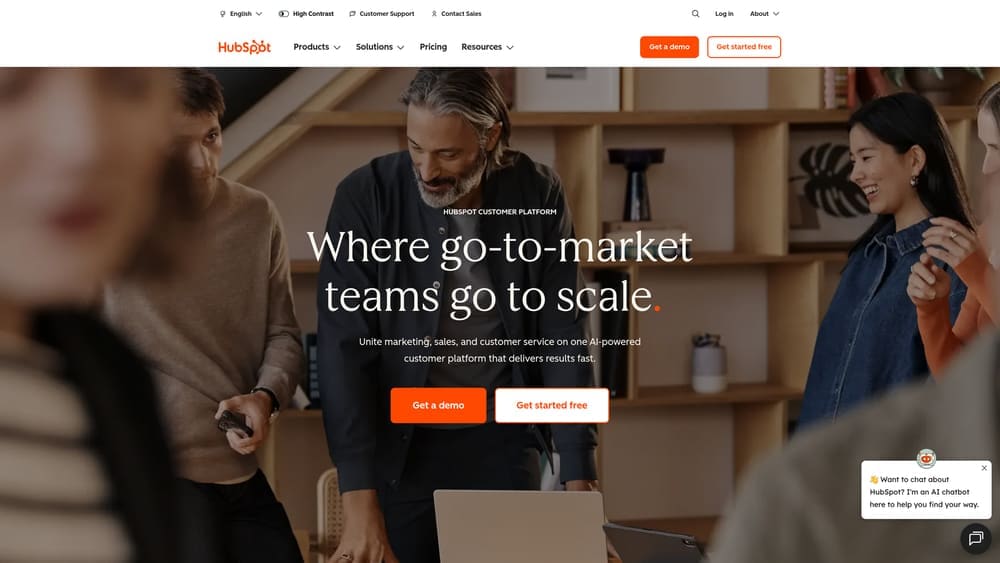
HubSpot Marketing Hub combines email marketing, landing pages, social media management, and sophisticated automation workflows in one unified platform.
Where This Tool Shines
HubSpot’s killer advantage is its native CRM integration. Your marketing automation lives in the same system as your sales pipeline, giving you complete visibility into how campaigns drive actual revenue. No wrestling with third-party integrations or wondering if your data synced properly.
The visual workflow builder makes complex automation accessible to non-technical marketers. You can create sophisticated nurture sequences, lead scoring rules, and conditional logic without touching a line of code. Plus, their free tier gives you legitimate marketing tools—not just a glorified trial period.
Key Features
Native CRM Integration: Marketing and sales data lives in one system with full customer journey visibility.
Visual Workflow Builder: Drag-and-drop automation creation with branching logic and conditional triggers.
Attribution Reporting: Track which campaigns and channels drive actual revenue, not just vanity metrics.
Free Tier: Includes email marketing, forms, landing pages, and basic automation—actually usable for small businesses.
Integration Marketplace: Connects with over 1,400 apps including Shopify, Salesforce, WordPress, and Stripe.
Best For
B2B service businesses and local companies that need marketing and sales working from the same playbook. If your team struggles with data silos between marketing tools and your CRM, HubSpot eliminates that friction entirely. Also ideal for businesses planning to scale—you won’t outgrow the platform.
Pricing
Free tier available with essential features. Starter plan at $20/month adds more contacts and removes HubSpot branding. Professional tier at $890/month unlocks advanced automation, A/B testing, and multi-touch attribution.
2. ActiveCampaign
Best for: Advanced automation with powerful segmentation and machine learning optimization
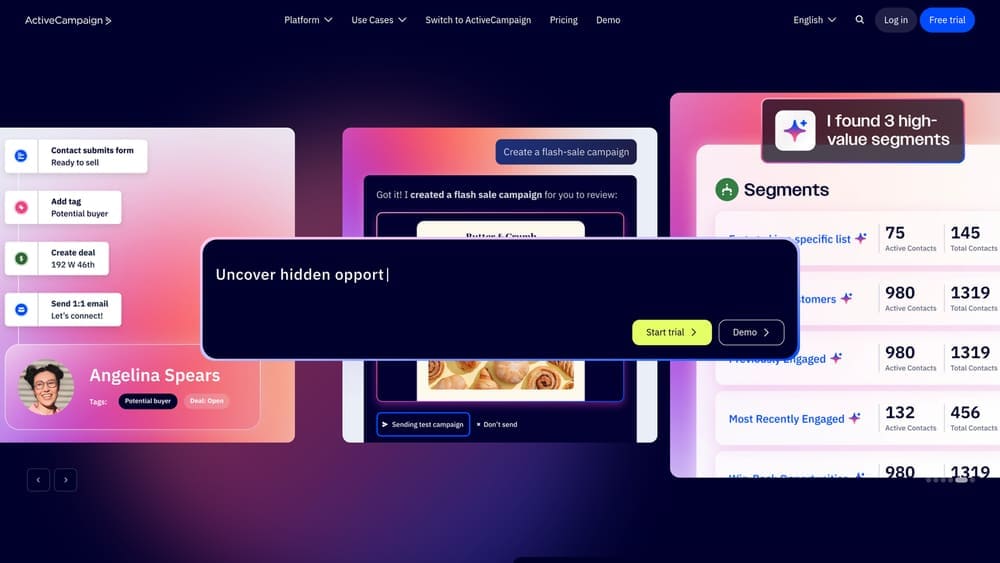
ActiveCampaign delivers customer experience automation that combines email marketing, sales automation, and CRM capabilities with sophisticated behavioral targeting.
Where This Tool Shines
ActiveCampaign’s automation engine goes deeper than most platforms at this price point. The conditional logic and branching capabilities rival enterprise tools, letting you create personalized customer journeys based on behavior, engagement, and custom data fields.
Their predictive sending feature uses machine learning to send emails when each individual contact is most likely to engage. It’s not just scheduling—it’s optimization at scale. The site and event tracking capabilities mean you can trigger campaigns based on specific actions users take on your website or in your product.
Key Features
Advanced Automation: Conditional branching, goals, and wait conditions create truly personalized customer journeys.
Predictive Sending: Machine learning determines optimal send times for each individual contact.
Behavioral Tracking: Site visits, event tracking, and custom data triggers enable hyper-relevant campaigns.
Built-in CRM: Sales automation and pipeline management included without separate tools.
SMS Integration: Add text messaging to your automation workflows for multichannel engagement.
Best For
Growing businesses that have outgrown basic email marketing and need sophisticated automation without enterprise pricing. Perfect for B2B companies with longer sales cycles requiring complex nurture sequences, or e-commerce brands wanting behavior-based personalization.
Pricing
Lite plan starts at $29/month for up to 1,000 contacts. Plus at $49/month adds landing pages and Facebook custom audiences. Professional at $149/month includes predictive sending, attribution, and advanced reporting.
3. Klaviyo
Best for: E-commerce businesses needing deep platform integrations and revenue-focused automation
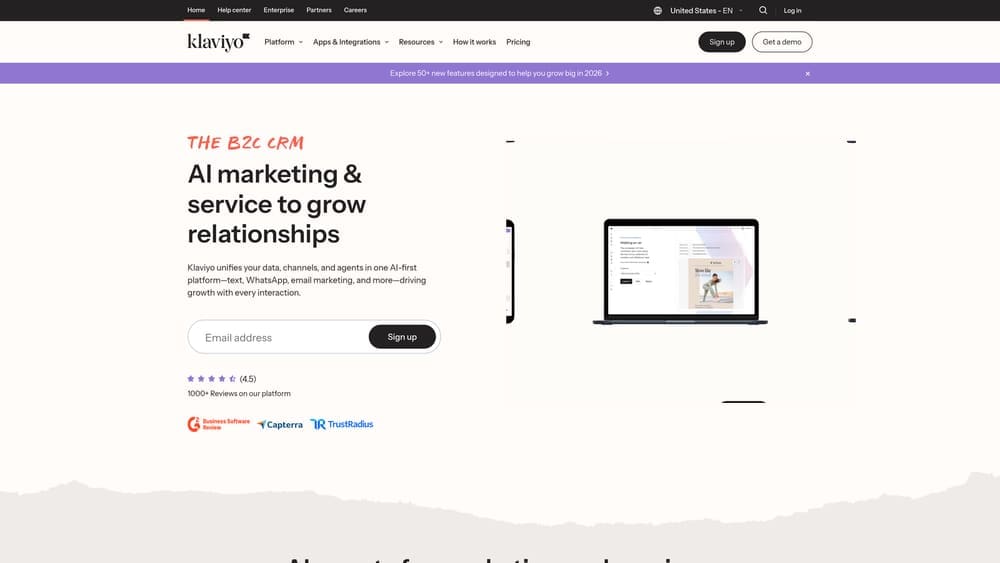
Klaviyo specializes in e-commerce marketing automation with native integrations for Shopify, BigCommerce, and WooCommerce, combining email and SMS marketing.
Where This Tool Shines
Klaviyo pulls product data, purchase history, and browsing behavior directly from your e-commerce platform—no manual setup required. This means you can create segments like “customers who bought X but not Y” or “browsers who viewed products over $100” in seconds.
The pre-built flows for abandoned cart, browse abandonment, and win-back campaigns deploy in minutes, not hours. Their predictive analytics show you each customer’s lifetime value and churn risk, helping you prioritize high-value segments. For online stores, this level of e-commerce intelligence is game-changing.
Key Features
Native E-commerce Integrations: Automatic sync of products, orders, and customer data from Shopify, BigCommerce, WooCommerce.
Pre-built Flows: Deploy proven automation for abandoned cart, welcome series, post-purchase, and win-back campaigns.
Purchase Behavior Segmentation: Create hyper-targeted segments based on what customers bought, browsed, or abandoned.
Predictive Analytics: Customer lifetime value predictions and churn risk scoring built into the platform.
Unified Email and SMS: Coordinate messaging across channels from one workflow builder.
Best For
E-commerce businesses of any size that want automation built specifically for online retail. If you’re running Shopify, BigCommerce, or WooCommerce and treating email marketing as a revenue channel (not just a newsletter), Klaviyo delivers the data depth and automation sophistication you need.
Pricing
Free up to 250 contacts with 500 monthly email sends. Email-only plans start at $20/month. Combined email and SMS starts at $35/month. Pricing scales with contact count and message volume.
4. Mailchimp
Best for: Small businesses and beginners wanting user-friendly email marketing with basic automation
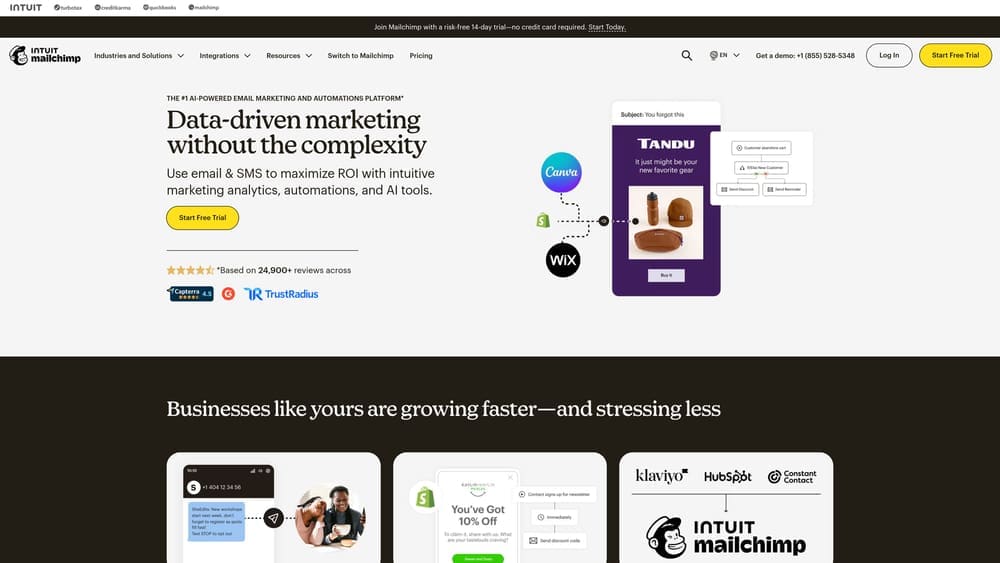
Mailchimp offers accessible email marketing, automation, landing pages, and basic CRM features designed for ease of use.
Where This Tool Shines
Mailchimp’s strength is its approachability. The drag-and-drop email builder is genuinely intuitive—you can create professional-looking campaigns without design skills or technical knowledge. For businesses just getting started with marketing automation, the learning curve is minimal.
The pre-built automation journeys (welcome emails, abandoned cart, birthday campaigns) deploy with a few clicks. You’re not building complex workflows from scratch—you’re customizing proven templates. For local businesses and small teams without dedicated marketing staff, this simplicity matters more than advanced features.
Key Features
Drag-and-Drop Builder: Intuitive email creation with templates and content blocks that actually look good.
Pre-built Journeys: One-click deployment of common automation workflows like welcome series and re-engagement.
Audience Segmentation: Tag and segment contacts based on behavior, demographics, and engagement.
Landing Pages and Forms: Create signup forms and landing pages without separate tools or coding.
Basic Analytics: Clear reporting on opens, clicks, and campaign performance without overwhelming detail.
Best For
Small local businesses, solopreneurs, and teams new to marketing automation who need results without a steep learning curve. If you’re currently doing everything manually and just need to automate the basics, Mailchimp gets you up and running fast.
Pricing
Free tier up to 500 contacts with 1,000 monthly email sends. Essentials at $13/month removes branding and adds basic automation. Standard at $20/month includes advanced audience insights and dynamic content.
5. Marketo Engage (Adobe)
Best for: Enterprise B2B companies needing sophisticated lead management and account-based marketing
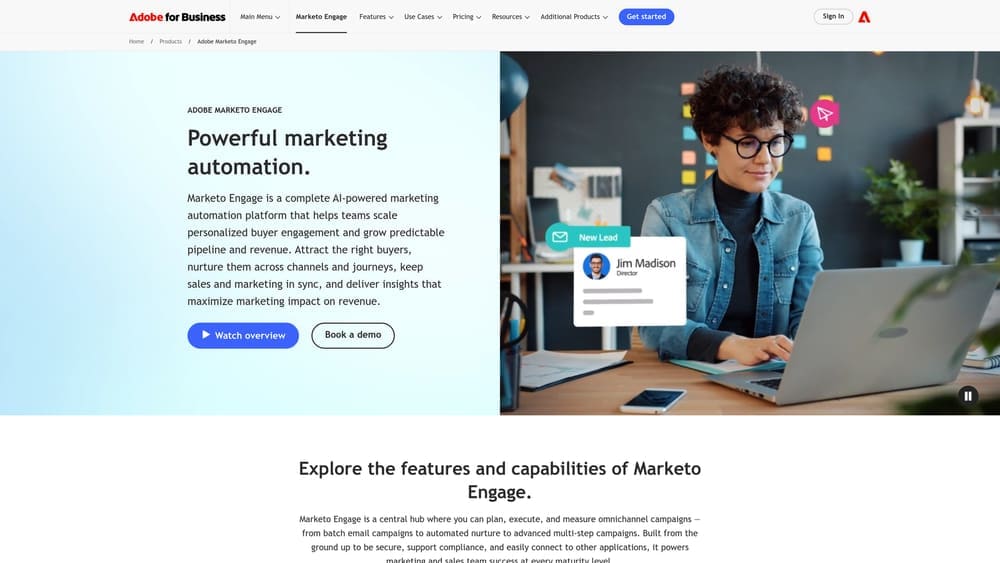
Marketo Engage delivers enterprise-grade B2B marketing automation with advanced lead scoring, account-based marketing, and multi-touch attribution.
Where This Tool Shines
Marketo handles complex B2B sales cycles that involve multiple stakeholders, long consideration periods, and coordinated account-based strategies. The lead scoring engine considers dozens of behavioral and demographic signals to identify sales-ready prospects.
The account-based marketing capabilities let you orchestrate campaigns targeting specific companies rather than just individual contacts. When you’re selling to enterprises with buying committees, this account-level view is essential. Integration with Adobe Experience Cloud means you can coordinate marketing automation with content management, analytics, and advertising in one ecosystem.
Key Features
Advanced Lead Scoring: Multi-dimensional scoring models incorporating behavior, demographics, and engagement patterns.
Account-Based Marketing: Target and measure campaigns at the account level, not just individual contacts.
Revenue Attribution: Multi-touch attribution models show marketing’s true impact on pipeline and revenue.
Adobe Integration: Native connection with Adobe Experience Cloud for unified customer data and experiences.
Enterprise Segmentation: Complex segmentation logic and personalization at scale for large contact databases.
Best For
Enterprise B2B companies with complex sales processes, multiple product lines, and dedicated marketing operations teams. If you’re running account-based marketing campaigns or need sophisticated attribution to prove marketing ROI to the C-suite, Marketo delivers the depth you need.
Pricing
Custom pricing based on database size and features. Growth tier typically starts around $895/month. Implementation and onboarding often require additional investment due to platform complexity.
6. Brevo (formerly Sendinblue)
Best for: Budget-conscious businesses wanting multichannel marketing without contact-based pricing
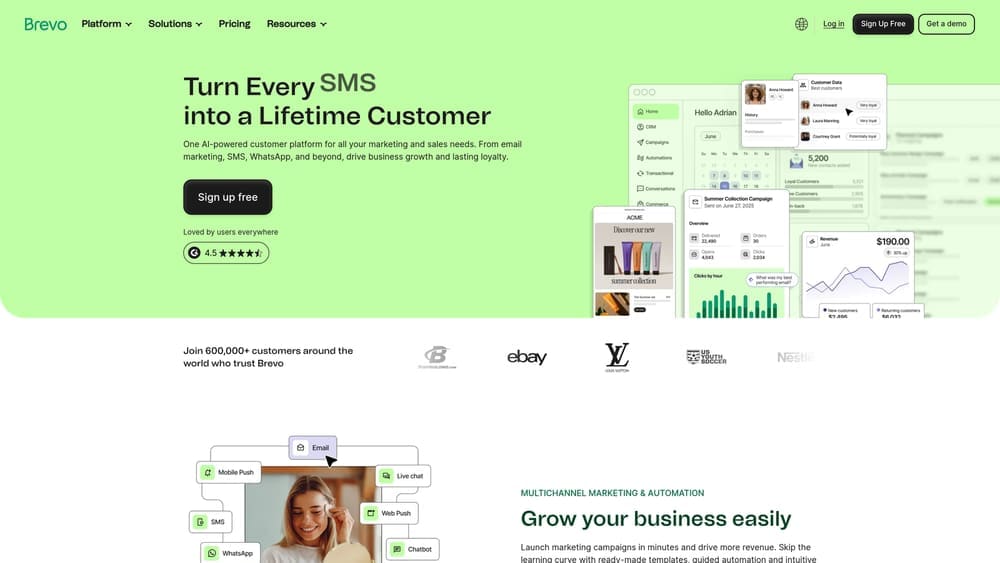
Brevo combines email, SMS, chat, and CRM capabilities with automation workflows at pricing that won’t break the bank.
Where This Tool Shines
Brevo’s email-based pricing model is a game-changer for businesses with large contact lists. Instead of paying based on how many contacts you have, you pay for how many emails you send. If you have 10,000 contacts but only email actively engaged segments, you’re not subsidizing the inactive ones.
The platform includes both marketing and transactional email in one system—no need for separate tools for newsletters and order confirmations. The built-in CRM and sales pipeline features mean small teams can manage contacts, deals, and marketing from one dashboard without juggling multiple subscriptions.
Key Features
Email-Based Pricing: Pay for sends, not contacts—dramatically cheaper for businesses with large lists.
Unified Platform: Marketing emails, transactional emails, SMS, and chat in one system.
Visual Automation: Drag-and-drop workflow builder with conditional logic and multi-channel triggers.
Built-in CRM: Contact management and sales pipeline tracking included at all tiers.
SMS Integration: Add text messaging to automation workflows without separate tools.
Best For
Small businesses and startups with tight budgets but ambitious growth plans. Perfect for companies that have accumulated large contact lists but only actively market to engaged segments. Also ideal for businesses needing transactional email capabilities alongside marketing automation.
Pricing
Free tier includes up to 300 emails per day with unlimited contacts. Starter at $25/month removes daily limits. Business at $65/month adds advanced automation, A/B testing, and marketing analytics.
7. Drip
Best for: E-commerce brands focused on revenue attribution and personalized customer journeys
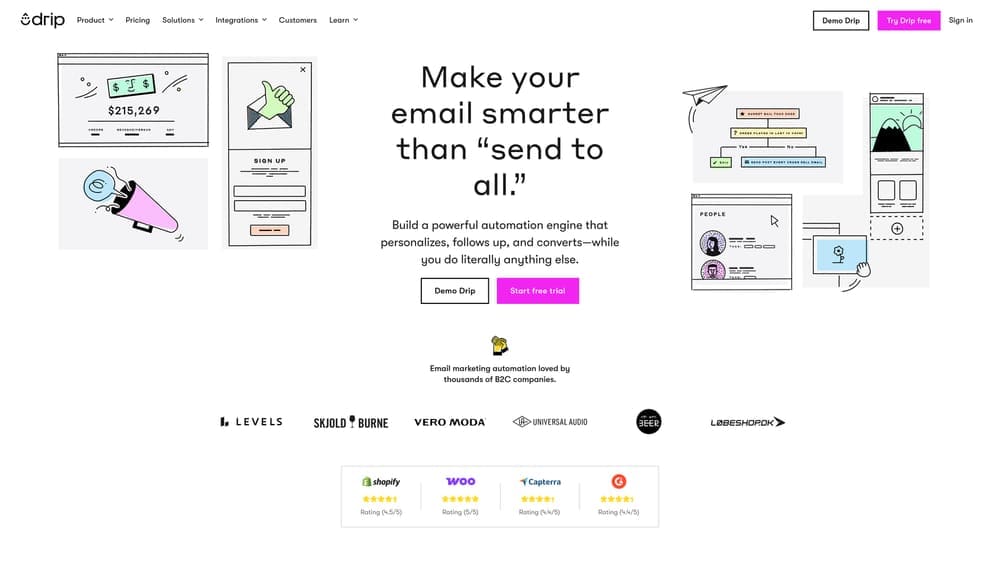
Drip positions itself as an e-commerce revenue engine with visual automation workflows and direct revenue tracking.
Where This Tool Shines
Drip’s visual workflow builder shows you revenue generated by each automation in real-time. You’re not guessing which campaigns drive sales—you see exact dollar amounts attributed to specific emails and sequences. This revenue-first approach makes it easy to justify your marketing spend.
The on-site personalization tools let you change website content based on customer data from Drip. Show different homepage banners to first-time visitors versus repeat customers, or display product recommendations based on browsing history. This level of personalization used to require expensive enterprise tools—Drip makes it accessible.
Key Features
Revenue Tracking: See exact revenue generated by each automation, campaign, and workflow in the dashboard.
E-commerce Integrations: Native connections with Shopify, WooCommerce, BigCommerce, and Magento.
Behavior-Based Segmentation: Create segments based on purchase history, browsing behavior, and custom events.
On-Site Personalization: Change website content dynamically based on customer data and behavior.
Visual Workflows: Build complex automation with branching logic while seeing revenue impact.
Best For
E-commerce businesses that treat email as a revenue channel and need to prove ROI. If you’re tired of vanity metrics and want to see how marketing automation actually impacts your bottom line, Drip’s revenue-focused approach delivers the clarity you need.
Pricing
Starts at $39/month for up to 2,500 contacts. Pricing scales with contact count. All plans include full feature access—no tiered feature restrictions.
8. Omnisend
Best for: E-commerce businesses wanting pre-built omnichannel workflows for quick deployment
Omnisend delivers omnichannel marketing with email, SMS, push notifications, and social media integration designed specifically for online stores.
Where This Tool Shines
Omnisend’s pre-built automation workflows deploy in minutes. You’re not starting from scratch—you’re activating proven sequences for welcome series, abandoned cart, browse abandonment, and post-purchase follow-ups. For time-strapped e-commerce teams, this speed to value matters.
The omnichannel approach coordinates email, SMS, and push notifications in one workflow. A customer abandons their cart? Send an email after one hour, an SMS after four hours, and a push notification the next day—all from one automation. The product picker and dynamic content blocks pull items directly from your store, keeping messaging relevant and personalized.
Key Features
Pre-Built Workflows: Deploy proven e-commerce automations with one click—no building from scratch.
Omnichannel Messaging: Coordinate email, SMS, push notifications, and Facebook messages in unified workflows.
Product Picker: Dynamic content blocks automatically pull products from your store into campaigns.
Audience Sync: Push segments directly to Facebook and Google Ads for retargeting campaigns.
Drag-and-Drop Builder: Create campaigns quickly with intuitive design tools and content blocks.
Best For
E-commerce businesses that want sophisticated omnichannel automation without the complexity or setup time. Perfect for online stores that know they need automation but don’t have technical resources or time to build custom workflows from scratch.
Pricing
Free tier up to 250 contacts with 500 monthly emails. Standard at $16/month adds SMS and unlimited emails. Pro at $59/month includes advanced reporting, automation, and priority support.
9. Customer.io
Best for: SaaS and product-led companies needing real-time event-triggered messaging
Customer.io specializes in behavior-driven messaging with real-time triggers based on user actions in your product or website.
Where This Tool Shines
Customer.io excels at real-time responsiveness. When a user performs an action in your product—completes onboarding, hits a usage limit, or abandons a feature—Customer.io triggers campaigns instantly. This immediacy matters for SaaS businesses where timing impacts conversion and retention.
The API-first architecture gives developers full control over data integration and event tracking. If your product team is technical and wants deep customization, Customer.io provides the flexibility without forcing you into rigid templates. In-app messaging and push notifications complement email, creating cohesive product experiences.
Key Features
Real-Time Triggers: Launch campaigns instantly based on user actions, not batch processing delays.
Visual Workflow Builder: Create complex branching logic with conditional paths and goal-based optimization.
API-First Design: Developer-friendly architecture for custom integrations and data syncing.
In-App Messaging: Deliver messages inside your product, not just via email or push notifications.
Comprehensive Data Options: Connect any data source through webhooks, APIs, or pre-built integrations.
Best For
SaaS companies and product-led businesses where user behavior inside the product drives marketing campaigns. If your growth strategy depends on activation, feature adoption, and retention—not just lead generation—Customer.io’s product-centric approach aligns with how your business actually grows.
Pricing
Essentials plan starts at $100/month for up to 5,000 profiles. Premium at $1,000/month adds advanced features like A/B testing, advanced segmentation, and priority support. Custom enterprise pricing available for larger organizations.
Making the Right Choice for Your Business
The best marketing automation platform depends on what you’re actually trying to accomplish and how your business operates.
For e-commerce businesses, Klaviyo, Drip, and Omnisend deliver the deep product integrations and revenue tracking that matter. Klaviyo wins on predictive analytics and data depth. Drip excels at showing exactly which campaigns drive revenue. Omnisend gets you up and running fastest with pre-built omnichannel workflows.
B2B service businesses typically get the most value from HubSpot or ActiveCampaign. HubSpot’s unified CRM eliminates data silos between marketing and sales. ActiveCampaign delivers enterprise-level automation sophistication without enterprise pricing. If you’re selling complex solutions with longer sales cycles, these platforms handle the nurture sequences and lead scoring you need.
Local businesses and small teams often benefit most from Mailchimp or Brevo. Mailchimp’s simplicity means you can start automating without technical expertise. Brevo’s email-based pricing saves money if you have a large contact list but only market to engaged segments. Both platforms get you results without overwhelming complexity.
Budget matters, but so does implementation time and learning curve. A cheaper platform that takes three months to implement and requires constant technical support costs more than a pricier solution that deploys in a week and your team actually uses. Consider total cost of ownership—not just monthly subscription fees.
The right automation platform amplifies what’s already working in your marketing. It doesn’t fix a broken strategy or compensate for unclear messaging. If you’re not sure what campaigns to automate or which customer journeys to build, that’s the real problem to solve first.
Tired of spending money on marketing that doesn’t produce real revenue? We build lead systems that turn traffic into qualified leads and measurable sales growth. If you want to see what this would look like for your business, we’ll walk you through how it works and break down what’s realistic in your market.
Marketing automation works when it’s connected to a strategy that actually converts. The platform is just the tool—the real work is understanding your customer journey and building campaigns that move people through it profitably.